


FOMC Minutes Today: 3 USD and Gold Scenarios Traders Should Prepare For
The Fed releases the July FOMC minutes on 19 August 2026. Here are three USD and gold scenarios, confirmation signals, and a practical risk checklist for traders.
Original

简体中文
繁體中文
English
Pусский
日本語
ภาษาไทย
Tiếng Việt
Bahasa Indonesia
Español
हिन्दी
Filippiiniläinen
Français
Deutsch
Português
Türkçe
한국어
العربية
اردو




Abstract:The Federal government of Nigeria has disclosed its plans to convert over 20 trillion naira ($45.4 billion) of the loans it has acquired previously from the CBN into a 40-years bond. This decision to convert the acquired loans into bonds will further assure investors that the borrowed money was not newly printed money added to the circulating amount of the Naira but rather a moratorium taken by the Federal government and to be repaid over time.
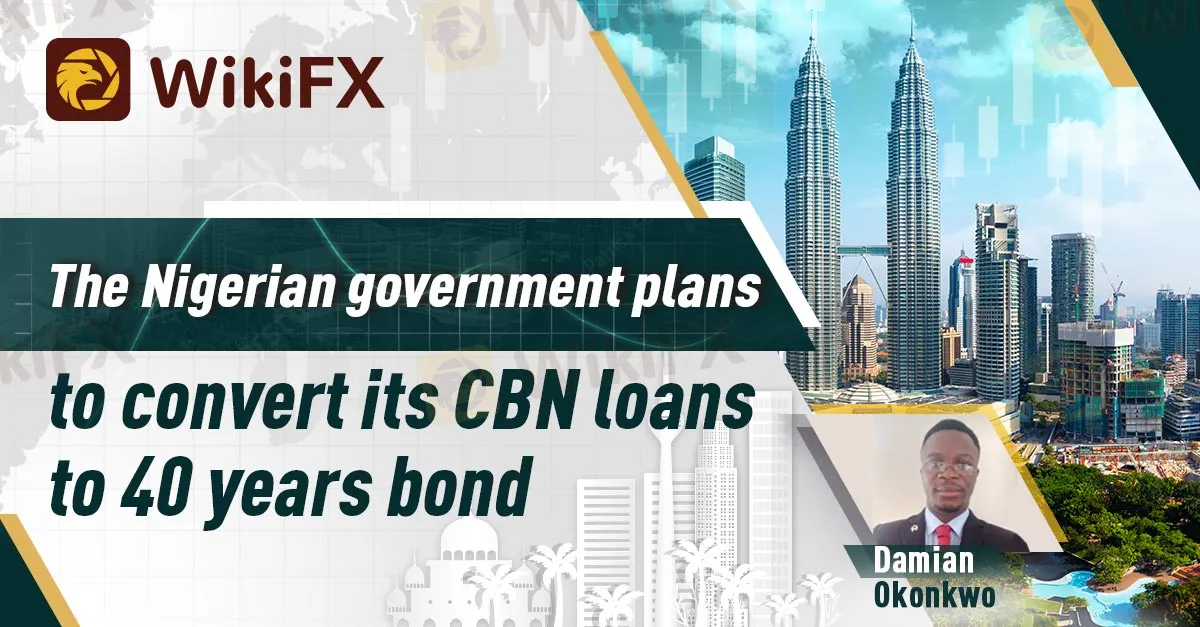
By: Damian Okonkwo

The Federal government of Nigeria has disclosed its plans to convert over 20 trillion naira ($45.4 billion) of the loans it has acquired previously from the CBN into a 40-years bond. This decision to convert the acquired loans into bonds will further assure investors that the borrowed money was not newly printed money added to the circulating amount of the Naira but rather a moratorium taken by the Federal government and to be repaid over time.
This present move seems necessary to restore investors' confidence in the economy, especially after the International Monetary Fund and the World Bank had condemned the government practices of using the central banks to finance its projects as it undermines investors' confidence in the economy. Hence, it urged the government authorities to reduce its dependency on the central banks and seek other alternatives for financing its projects.
The current conversion of the government loan into a bond will further increase the country's debt stock to 35% against the 25% seen previously in the GDP from June.
Speaking on this development, the Nigerian Debt Management head Officer - Patience Oniha revealed that the present loan obtained from the CBN is a repayable loan over after 40 years and that time of its conversion will be announced after the lawmakers have given approval.
It is important to note here that the present 20 trillion loan which the FG had obtained from the CBN was not previously included in the country's current debt records disclosed as 42.8 trillion in GDP in June.
Nigeria despite being the giant of Africa and blessed with rich natural resources has been barely able to raise enough revenue from its natural resources to cover its debts annually.
In 2021 for instance, total government income of 1.63 trillion Naira during the first four months was barely sufficient to cover its debt of over 1.94 trillion Naira as disclosed by the finance minister. This inability to clear the outstanding debts appears to be the major reason why the FG seems to be resorting to borrowing from its central banks rather than continuing borrowing from international banks.
However, a major disadvantage of borrowing from the CBN is that it dissuades investors especially when these loans are not added to the nation's debts. In this case, it becomes newly printed money which devalues the currency and increases the inflation rate.

Disclaimer:
The views in this article only represent the author's personal views, and do not constitute investment advice on this platform. This platform does not guarantee the accuracy, completeness and timeliness of the information in the article, and will not be liable for any loss caused by the use of or reliance on the information in the article.
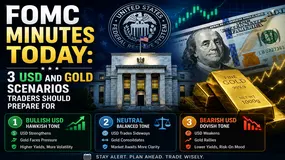
The Fed releases the July FOMC minutes on 19 August 2026. Here are three USD and gold scenarios, confirmation signals, and a practical risk checklist for traders.
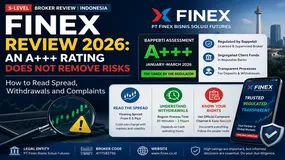
FINEX review 2026 for readers comparing an Indonesia forex broker: understand what Bappebti's A+++ rating does and does not show, then check floating spreads, withdrawals, segregated accounts and the complaint route for PT Finex Bisnis Solusi Futures.

Choosing a forex liquidity provider is not a search for the lowest displayed spread or the longest provider list. It is a broker decision about pricing integrity, depth, routing, credit, reporting, incident response, and client communication. This 2026 guide explains how a forex LP, FX liquidity provider, or liquidity provider forex arrangement fits into a broker’s execution chain; what to test before onboarding; why a “best forex liquidity provider” claim cannot replace due diligence; and how to compare cost beyond commission. Use the execution-quality scorecard, provider questions, routing scenarios, and 90-day onboarding plan to assess whether a liquidity relationship can support your actual client mix, instruments, risk model, and jurisdiction. The goal is not to make a universal ranking. It is to build evidence that your broker can explain, supervise, reconcile, and recover its execution service when market conditions are difficult.
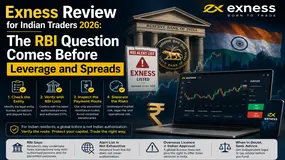
Exness review for Indian traders in 2026. This guide explains what the RBI Alert List says, what it does not say, why a global license is not Indian authorization, and how to verify permitted forex routes before funding an account.
WikiFXWikiFXWikiFXWikiFXWikiFXWikiFXWikiFXWikiFXWikiFXWikiFX