


FOMC Minutes Today: 3 USD and Gold Scenarios Traders Should Prepare For
The Fed releases the July FOMC minutes on 19 August 2026. Here are three USD and gold scenarios, confirmation signals, and a practical risk checklist for traders.
Original

简体中文
繁體中文
English
Pусский
日本語
ภาษาไทย
Tiếng Việt
Bahasa Indonesia
Español
हिन्दी
Filippiiniläinen
Français
Deutsch
Português
Türkçe
한국어
العربية
اردو




Abstract:The evolving landscape of global cryptocurrency regulations in 2024, from the US's complex approach to China's strict stance, and the EU's unified framework. Understand the challenges and goals driving regulatory strategies worldwide.
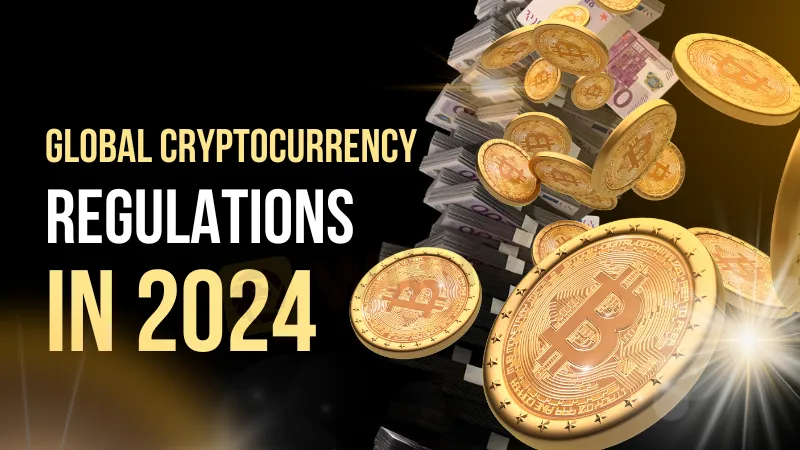
Since Bitcoin's beginnings fifteen years ago, the worldwide landscape of cryptocurrency regulation has shifted substantially. This vast and quickly increasing realm of digital assets continues to provide new problems and possibilities for regulatory systems across the globe.
 Contents
In the United States, the approach to cryptocurrency regulation is complex and changing. There are many regulatory entities engaged, each with its point of view. The Commodity Futures Trading Commission (CFTC) and the Securities and Exchange Commission (SEC) have important responsibilities in defining the regulatory environment.

A significant development occurred in July 2023 when a bipartisan bill critical to the future of cryptocurrency regulation was introduced in Congress. This law, which defines cryptocurrencies as either securities or commodities, is expected to strengthen the CFTC's monitoring while clarifying the SEC's authority.
In the United States, regulatory proceedings against organizations and people in the cryptocurrency industry have escalated due to non-compliance with current legislation. Major players like PayPal, Ripple, and Coinbase have been scrutinized. The U.S. Treasury Department's 2021 plans to monitor cryptocurrency transactions over $10,000 demonstrate the government's commitment to tackling criminal activity aided by digital currencies.
The SEC's approval of multiple Bitcoin Spot ETFs indicates a dramatic change in the regulator's position on cryptocurrency-related financial products. Despite this, SEC Chairman Gary Gensler has said that these approvals do not imply an endorsement of Bitcoin. Binance, a cryptocurrency exchange, and its CEO were charged by the SEC in a large enforcement action, resulting in a significant financial penalty for violating US securities laws.
Related News:
The European Union (EU) is working to create a single regulatory framework for cryptocurrencies. The Markets in Crypto-Assets (MiCA) initiative, announced in September 2020, is a comprehensive attempt to regulate digital assets, assuring investor safety and financial stability while encouraging innovation.

MiCA addresses a variety of issues in the crypto-asset sector, including unbacked crypto-assets, stablecoins, and trading platforms. It focuses on protecting investors' assets, fighting market abuse, and monitoring digital currency's environmental effects.
Recent developments in the EU, including the ratification of the MiCA law and the incorporation of the cryptocurrency business into the Transfer of Funds law (TRF), indicate a concerted effort to successfully regulate the crypto area.
China's stance on Bitcoin has been particularly harsh. The National Internet Finance Association (NIFA) issued an early warning regarding ICOs, prompting a full prohibition. In 2021, the People's Bank of China (PBOC) and other authorities produced a regulation paper declaring cryptocurrency transactions unlawful and preventing financial institutions from providing related services.

Despite some rumors regarding a prospective softening of the crypto prohibition based on a tax-related article, China's position remains steadfast. The government continues to enforce its prohibition on bitcoin trading and ICO-related websites.
Despite problems like the Mt. Gox debacle, Japan saw the promise of cryptocurrencies early on. While Japan does not consider digital currencies to be legal cash, it recognizes their buying power and has put rules in place to protect consumers and prohibit criminal activity.

Recent initiatives, such as the proposal to abolish taxes on unrealized cryptocurrency profits and the possibility of easing limits on foreign-issued stablecoins, demonstrate Japan's continuous commitment to creating a favorable environment for cryptocurrencies and blockchain technology.
The Monetary Authority of Singapore (MAS) has repeatedly underlined the dangers connected with cryptocurrency trading. Singapore's cautious but proactive stance is shown in the Payment Services Act of 2020 and other laws, such as a prohibition on crypto service providers publicizing their services in public places.

The MAS's recent actions, such as responding to input on draft crypto laws and completing stablecoin guidelines, reflect a commitment to ensuring a safe and responsible crypto economy.
India's cryptocurrency path has been turbulent. The RBI's first warnings, followed by a banking ban and a subsequent Supreme Court decision reversing the prohibition, show the challenges of governing digital currencies in India.

Recent regulatory steps, such as show-cause notifications to offshore cryptocurrency exchanges and the publication of a Concept Note on Central Bank Digital Currency (CBDC), imply a more systematic approach to governing the crypto industry.

South Korea has adopted a proactive approach to digital asset regulation, with an emphasis on avoiding abuse and maintaining market stability. This approach is reflected in the restriction on anonymous trading and the establishment of particular financial transaction laws. The delay in implementing crypto profits taxes, as well as the plan to prohibit credit card usage for cryptocurrency transactions, demonstrate South Korea's cautious regulatory policy.

While there is no official cryptocurrency legislation in the Philippines, current rules have an impact on the crypto sector. The BSP requires cryptocurrency exchanges to register and comply with anti-money laundering and counter-terrorism funding legislation. The SEC's monitoring of ICOs, as well as its proposals to implement Digital Asset Security Service Provider Rules, demonstrate a rising emphasis on comprehensive crypto regulation.
The Financial Action Task Force (FATF) has a significant impact on global cryptocurrency regulations. Its proposals, notably the Travel Rule, have influenced how nations construct virtual asset regulatory regimes. The Philippines, although not a direct member, follows FATF principles via its membership in the Asia/Pacific Group on Money Laundering.
The bottom line, the worldwide regulatory environment for cryptocurrencies in 2024 is varied and developing. Each country's strategy reflects its issues and goals, but all aim to strike a balance between innovation, consumer protection, and financial stability. As the digital asset field expands, regulatory frameworks will most likely change and develop to meet new trends and difficulties.

Disclaimer:
The views in this article only represent the author's personal views, and do not constitute investment advice on this platform. This platform does not guarantee the accuracy, completeness and timeliness of the information in the article, and will not be liable for any loss caused by the use of or reliance on the information in the article.
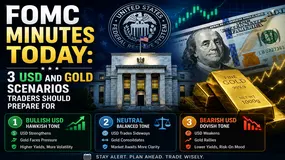
The Fed releases the July FOMC minutes on 19 August 2026. Here are three USD and gold scenarios, confirmation signals, and a practical risk checklist for traders.

Choosing a forex liquidity provider is not a search for the lowest displayed spread or the longest provider list. It is a broker decision about pricing integrity, depth, routing, credit, reporting, incident response, and client communication. This 2026 guide explains how a forex LP, FX liquidity provider, or liquidity provider forex arrangement fits into a broker’s execution chain; what to test before onboarding; why a “best forex liquidity provider” claim cannot replace due diligence; and how to compare cost beyond commission. Use the execution-quality scorecard, provider questions, routing scenarios, and 90-day onboarding plan to assess whether a liquidity relationship can support your actual client mix, instruments, risk model, and jurisdiction. The goal is not to make a universal ranking. It is to build evidence that your broker can explain, supervise, reconcile, and recover its execution service when market conditions are difficult.
Crypto trading revenue weakened across major platforms in Q2 2026 as market activity slowed, while another crypto-focused platform expanded into forex and CFD products, highlighting a broader shift toward multi-asset trading.

Has your trading experience with Market10, a South Africa-based brokerage entity, been miserable? Did you fail to receive funds in your trading account despite approvals on the Market10 login dashboard? Did the broker constantly push you into depositing while withholding your earlier funds? In this Market10 review, we have shed light on the growing allegations against the broker. Additionally, we have provided an overview of the broker’s regulatory status.
WikiFXWikiFXWikiFXWikiFXWikiFXWikiFXWikiFXWikiFXWikiFXWikiFX