


FOMC Minutes Today: 3 USD and Gold Scenarios Traders Should Prepare For
The Fed releases the July FOMC minutes on 19 August 2026. Here are three USD and gold scenarios, confirmation signals, and a practical risk checklist for traders.
Original

简体中文
繁體中文
English
Pусский
日本語
ภาษาไทย
Tiếng Việt
Bahasa Indonesia
Español
हिन्दी
Filippiiniläinen
Français
Deutsch
Português
Türkçe
한국어
العربية
اردو




Abstract:New York escalates a lawsuit against DCG and Barry Silbert, accusing them of a $3 billion fraud affecting over 230,000 investors. The legal battle intensifies.
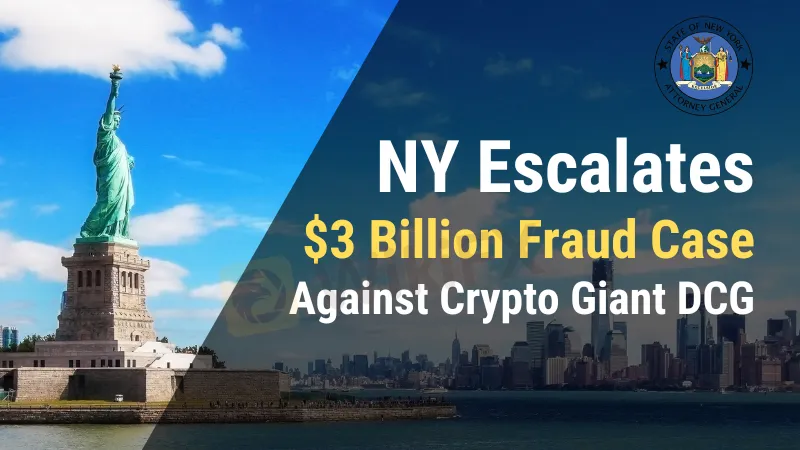
With the growth of legal action in the digital financial world, New York's legal authorities have escalated their claims against Digital Currency Group (DCG), a prominent player in the cryptocurrency industry. The case has been amended to include a demand for more than $3 billion against DCG and its CEO, Barry Silbert, accusing them of a massive fraud operation that has damaged over 230,000 investors.
The heart of the issue stems from a series of charges that DCG, its subsidiary Genesis Global Capital (Genesis), and cryptocurrency exchange Gemini Trust Company participated in misleading tactics. Initially, the case, filed in October 2023, identified deceptive material about the Gemini Earn program, which was marketed as a low-risk investment option. This scheme, however, resulted in losses of more than $1 billion, dealing a huge blow to investor confidence and financial stability.
As the legal processes continue, Attorney General Letitia James has accused DCG and Genesis of putting up a complicated veneer to conceal their dire financial situation. The use of a $1.1 billion promissory note, allegedly intended to conceal Genesis' financial weaknesses, is central to this claim. This strategy, coupled with other misleading activities, allegedly deceived investors about Genesis' operational sustainability and the safety of their investment funds.
Attorney General James' assertion that DCG's operations were rife with fraudulent activity that misled investors about the security of their money and the general viability of the investment programs offered complicates the deception story even further. “The fraud and deception were so widespread that many more people have come forward to report similar harm,” James said, highlighting the scope and depth of the alleged fraudulent actions.

This legal battle is about more than just seeking compensation for wronged investors; it also highlights a larger effort by Attorney General James to strengthen regulatory oversight of the cryptocurrency industry. The measures include introducing entire cryptocurrency legislation for New York to improve rules and suing fraudulent and deceptive crypto firms. This coordinated effort includes warnings and assistance for both investors and industry professionals, indicating a comprehensive plan to safeguard market integrity and investor interest.
The lawsuit's extension to seek more than $3 billion in reparations demonstrates the gravity of the claims and New York's legal authorities' determination to confront and correct the alleged malpractices. This legal action against DCG and its founders highlights the increasing scrutiny and regulatory pressure on the cryptocurrency business, which is growing more unpredictable and riskier for investors.
This case has far-reaching repercussions for DCG and its stockholders. It is a watershed moment in the cryptocurrency market's regulatory environment, indicating possibly more regulation and enforcement measures in the future. The court decision might set norms for accountability and operational transparency in the digital currency space, impacting industry practices and investor protections.
As the court struggle plays out, the Bitcoin sector and its stakeholders are closely watching what happens. The lawsuit against DCG and Barry Silbert shows the complexity of regulating the digital financial ecosystem and the necessity for robust regulatory frameworks to combat fraud and protect market integrity. The developing tale emphasizes the hazards and complexity of the rapidly expanding cryptocurrency industry, as well as the need for regulatory and legal safeguards to protect investors' interests and market stability.
Stay ahead in the financial world with the latest updates. For more on the DCG lawsuit and other crucial market news, visit WikiFX Daily News today!

Disclaimer:
The views in this article only represent the author's personal views, and do not constitute investment advice on this platform. This platform does not guarantee the accuracy, completeness and timeliness of the information in the article, and will not be liable for any loss caused by the use of or reliance on the information in the article.
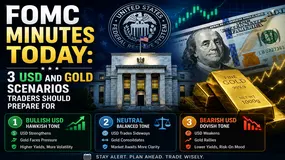
The Fed releases the July FOMC minutes on 19 August 2026. Here are three USD and gold scenarios, confirmation signals, and a practical risk checklist for traders.

India's rupee is expected to open near 95.14-95.16 per US dollar after closing at 95.2075 on Friday, while Brent crude was quoted at $84.50 and RBI market presence supported the currency. This report separates a reported market intervention from a fixed exchange-rate target, explains why oil, US employment data and Federal Reserve expectations matter, and gives a practical risk checklist for forex trading India. It also explains why volatility is not a reason to trust unverified online forex trading platforms.

The Reserve Bank of India has appointed Monisha Chakraborty as Executive Director with effect from 3 August 2026; she will oversee the Foreign Exchange Department and the Financial Markets Regulation Department. Chakraborty is a career central banker with over three decades of experience in Supervision, Foreign Exchange, and Government and Bank Accounts, and previously served as Banking Ombudsman. This report explains the significance of the new RBI Executive Director appointment for forex regulation India, the scope of the Foreign Exchange Department and the Financial Markets Regulation Department, and what authorised persons, banks, and forex market participants should monitor as the new ED takes charge.

RBI's concessional forex swap facility had mobilised $40.82 billion by 31 July 2026, with FCNR(B) deposits providing $36.725 billion of the total. This India-focused analysis separates confirmed inflows from the $80–85 billion SBI Research projection, compares the 2026 programme with the 2013 FCNR(B) window, and explains what the numbers can—and cannot—do for the Indian rupee. It also shows how banks, NRI depositors, importers, exporters and institutional investors may be affected, while highlighting the oil, dollar, maturity and hedging risks that still matter for USD/INR and forex trading in India.
WikiFXWikiFXWikiFXWikiFXWikiFXWikiFXWikiFXWikiFXWikiFXWikiFX