


FOMC Minutes Today: 3 USD and Gold Scenarios Traders Should Prepare For
The Fed releases the July FOMC minutes on 19 August 2026. Here are three USD and gold scenarios, confirmation signals, and a practical risk checklist for traders.
Original

简体中文
繁體中文
English
Pусский
日本語
ภาษาไทย
Tiếng Việt
Bahasa Indonesia
Español
हिन्दी
Filippiiniläinen
Français
Deutsch
Português
Türkçe
한국어
العربية
اردو




Abstract:The court overturned the Cyprus Securities and Exchange Commission's 2014 fines on Bank of Cyprus executives, citing an impartiality breach.
The Cyprus Securities and Exchange Commission (CySEC) announced today (Monday) that the Administrative Court has annulled a series of fines imposed on former executives of the Bank of Cyprus Public Company Ltd in 2014. The court's decision was based on a breach of impartiality during the original decision-making process.
On June 14 and May 21, 2024, the court overturned the administrative fines against 13 former officials of the Bank of Cyprus. These fines were initially imposed following an investigation into the bank's Greek Government Bonds (GGB) investments. The penalties, dated April 28, 2014, were associated with alleged violations of transparency requirements and public offer regulations.
The Administrative Court found that these decisions were “without basis” due to a previous ruling by the Supreme Constitutional Court. In Appeal No. 99/2022, the Supreme Constitutional Court determined that CySEC's 2014 decision was compromised by “a breach of the objective aspect of the principle of impartiality.” This breach occurred because the Chairman of CySEC participated in the decision-making process.

The annulment affects prominent figures in Cyprus' financial sector, nullifying the penalties imposed on 13 individuals. A decade ago, CySEC had issued fines ranging from €80,000 to €350,000, collectively amounting to a multi-million-euro financial penalty package.
According to the court's decision, “An amount of €1,500 plus VAT shall be awarded in favor of the applicants and against the defendant in each action.” This marks a significant financial and reputational relief for the affected individuals.
The Bank of Cyprus, a financial services company founded in 1899 and headquartered in Strovolos, is distinct from the country's leading monetary institution, the Central Bank of Cyprus. In 2017, CySEC imposed another fine on the Bank of Cyprus, its former CFO, and ten directors, totaling over €595,000 for accounting disclosure failures and other infractions. These fines followed CySEC's investigation into violations by the firm, its board members, and its former CFO due to negligence.
Recently, CySEC has been active with new initiatives. Last week, CySEC launched its Regulatory Sandbox, which is now open for applications from entities involved in FinTech and RegTech in Cyprus. This initiative aims to foster innovation in the financial sector by providing a controlled environment for testing new technologies.
In addition, in July, CySEC announced the launch of a thematic review concerning managing uninvested funds by Cyprus Investment Firms (CIFs) on behalf of clients. This review, known as 'the Exercise,' aims to evaluate how CIFs handle these funds, including the payment of interest or returns.
In June, the regulator launched a consultation to gather market views on proposed fees and reporting requirements under the Markets in Crypto-Assets Regulation (MiCA). This initiative invites stakeholders to provide their opinions and influence the future framework, with responses due by July 17, 2024.
The annulment of the fines by the Administrative Court represents a significant development in Cyprus' financial regulatory landscape, highlighting the importance of impartiality in regulatory decisions. This decision impacts the individuals involved and sets a precedent for future regulatory actions in the country.

Disclaimer:
The views in this article only represent the author's personal views, and do not constitute investment advice on this platform. This platform does not guarantee the accuracy, completeness and timeliness of the information in the article, and will not be liable for any loss caused by the use of or reliance on the information in the article.
The Fed releases the July FOMC minutes on 19 August 2026. Here are three USD and gold scenarios, confirmation signals, and a practical risk checklist for traders.
FINEX review 2026 for readers comparing an Indonesia forex broker: understand what Bappebti's A+++ rating does and does not show, then check floating spreads, withdrawals, segregated accounts and the complaint route for PT Finex Bisnis Solusi Futures.

Choosing a forex liquidity provider is not a search for the lowest displayed spread or the longest provider list. It is a broker decision about pricing integrity, depth, routing, credit, reporting, incident response, and client communication. This 2026 guide explains how a forex LP, FX liquidity provider, or liquidity provider forex arrangement fits into a broker’s execution chain; what to test before onboarding; why a “best forex liquidity provider” claim cannot replace due diligence; and how to compare cost beyond commission. Use the execution-quality scorecard, provider questions, routing scenarios, and 90-day onboarding plan to assess whether a liquidity relationship can support your actual client mix, instruments, risk model, and jurisdiction. The goal is not to make a universal ranking. It is to build evidence that your broker can explain, supervise, reconcile, and recover its execution service when market conditions are difficult.
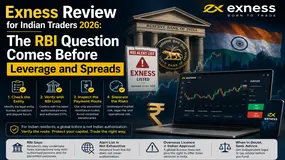
Exness review for Indian traders in 2026. This guide explains what the RBI Alert List says, what it does not say, why a global license is not Indian authorization, and how to verify permitted forex routes before funding an account.
WikiFXWikiFXWikiFXWikiFXWikiFXWikiFXWikiFXWikiFXWikiFXWikiFX