


FOMC Minutes Today: 3 USD and Gold Scenarios Traders Should Prepare For
The Fed releases the July FOMC minutes on 19 August 2026. Here are three USD and gold scenarios, confirmation signals, and a practical risk checklist for traders.
Original

简体中文
繁體中文
English
Pусский
日本語
ภาษาไทย
Tiếng Việt
Bahasa Indonesia
Español
हिन्दी
Filippiiniläinen
Français
Deutsch
Português
Türkçe
한국어
العربية
اردو




Abstract:According to Bloomberg, in a decisive move, the Bank of Canada (BoC) has reduced its key interest rate by 25 basis points to 4.50%, marking the first rate cut among G7 nations and widening the policy rate gap with the Federal Reserve to its largest since 2007. This move signals potential further easing, intensifying speculation around the Federal Reserve's upcoming decisions. ING anticipates a Fed rate cut in September, but the volatile U.S. bond market suggests a potential move as soon as next week.
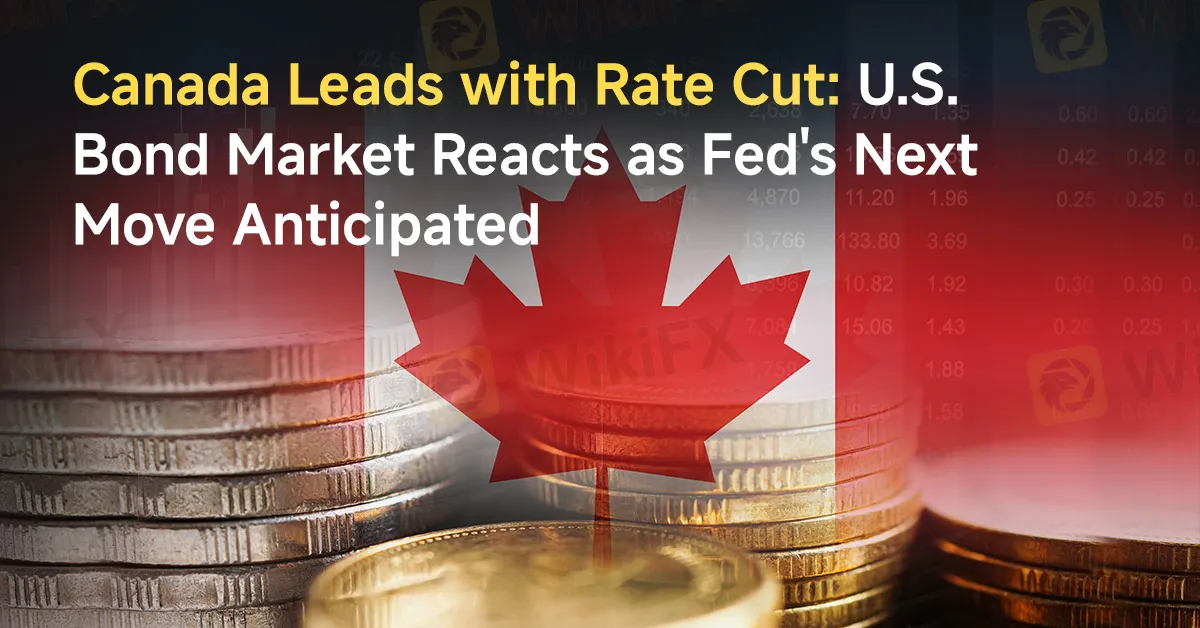
According to Bloomberg, in a decisive move, the Bank of Canada (BoC) has reduced its key interest rate by 25 basis points to 4.50%, marking the first rate cut among G7 nations and widening the policy rate gap with the Federal Reserve to its largest since 2007. This move signals potential further easing, intensifying speculation around the Federal Reserve's upcoming decisions. ING anticipates a Fed rate cut in September, but the volatile U.S. bond market suggests a potential move as soon as next week.
BoCs Doveish Stance
BoC Governor Tiff Macklem's statements and press conference remarks bolstered dovish expectations following the rate cut. Emphasizing the downside risks to the economy, Macklem stated, “We need economic growth to rebound so that inflation doesnt fall too much, even as we strive to bring inflation down to our 2% target="_blank" kwlink="6384064000816950219725">target.” While ING considers this a moderate view, the BoC's new quarterly forecast reflects cautious optimism, projecting overall and core inflation to hit 2.0% by the end of next year, with GDP growth forecasts adjusted downward to 1.2% for 2024 and 2.1% for 2025.
Interest Rate Differential Concerns
Analysts highlight concerns over the widening interest rate differential between the BoC and the Fed, currently at -100 basis points. This is the most significant negative differential since 2007, and should the BoC cut rates again before the Fed, it would create the largest gap in 25 years. However, the BoCs primary concern does not appear to be this differential.
Currency Implications
There are worries about the Canadian dollar (CAD) depreciating excessively against the U.S. dollar (USD) due to divergent central bank policies. ING notes, “We must acknowledge that the BoC‘s latest statement and monetary policy report did not address forex-related inflation risks. Notably, since the BoC’s rate cut in mid-July, the USD/CAD has risen by just 1.2%, less than other G10 currency pairs. As long as USD/CAD remains around 1.38 or higher, concerns over excessive currency depreciation should be minimal.”
Market Expectations and Future Moves
Despite the current dovish outlook, market expectations for the BoCs September 4 meeting are at -15 basis points, possibly due to the timing being two weeks before the Fed's meeting. Post rate cut, year-end expectations have hovered around -45 basis points.
ING aligns with market forecasts, predicting the BoC to pause in September, followed by 25 basis point cuts in October and December. Macklems dovish comments suggest a higher likelihood of a September cut, heavily dependent on inflation trends and economic health. “Macklem seems to have shifted focus from inflation to growth, indicating a potential September cut,” ING remarks.
Fed's Influence and Potential Rate Cut
The Fed's policy will significantly influence market expectations. If the market prices are in a September Fed rate cut, it may partially expect a BoC cut in the same month. ING's base case predicts the Fed cutting rates in September, possibly leading the BoC to cut rates two weeks earlier. This could increase the likelihood of additional cuts by the BoC before year-end.
Impact on CAD
The CAD has shown resilience despite the BoC's rate cut, reflecting the move in prices. Recently, the CAD has outperformed the AUD, NZD, NOK, and SEK. This trend may continue in the short term due to reduced risks from the new Trump administration compared to other high-beta G10 currencies, and better liquidity in the CAD, making it more resistant to risk-off sentiment.
However, the widening USD/CAD interest rate differential suggests continued upward pressure on the currency pair. ING forecasts a potential break above 1.380 and an extension towards 1.390 if the market fully prices in a September BoC cut. A Fed policy easing could trigger a USD/CAD pullback in the short term. “We still hold a medium-term bullish view, expecting USD/CAD to fall below 1.350.”
Conclusion
Former New York Fed President William Dudleys recent call for the Fed to cut rates next week to counter recession fears has added fuel to the speculation. This marks a significant shift from his long-held view that the Fed would maintain high rates for an extended period.

Disclaimer:
The views in this article only represent the author's personal views, and do not constitute investment advice on this platform. This platform does not guarantee the accuracy, completeness and timeliness of the information in the article, and will not be liable for any loss caused by the use of or reliance on the information in the article.
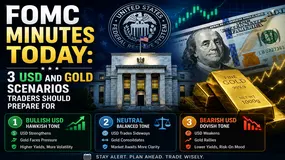
The Fed releases the July FOMC minutes on 19 August 2026. Here are three USD and gold scenarios, confirmation signals, and a practical risk checklist for traders.

A Prime of Prime forex arrangement can help a broker access trading relationships, credit intermediation, technology connectivity, and liquidity aggregation that may otherwise be difficult to obtain directly. But the label does not prove direct bank access, executable depth, or a particular execution outcome. This 2026 guide explains what a forex Prime of Prime, PoP liquidity provider, prime brokerage forex service, and forex prime broker proposal can mean in practice; where the credit and order-routing chain must be documented; how to test pricing, limits, rejects, records, and resilience; and which commercial terms create hidden operating cost. Use the comparison framework, red-flag list, and 90-day launch plan to assess fit for your client mix and risk model. The objective is a controllable execution dependency with traceable evidence, not a marketing claim about institutional access.

FINEX review 2026 for readers comparing an Indonesia forex broker: understand what Bappebti's A+++ rating does and does not show, then check floating spreads, withdrawals, segregated accounts and the complaint route for PT Finex Bisnis Solusi Futures.

Choosing a forex liquidity provider is not a search for the lowest displayed spread or the longest provider list. It is a broker decision about pricing integrity, depth, routing, credit, reporting, incident response, and client communication. This 2026 guide explains how a forex LP, FX liquidity provider, or liquidity provider forex arrangement fits into a broker’s execution chain; what to test before onboarding; why a “best forex liquidity provider” claim cannot replace due diligence; and how to compare cost beyond commission. Use the execution-quality scorecard, provider questions, routing scenarios, and 90-day onboarding plan to assess whether a liquidity relationship can support your actual client mix, instruments, risk model, and jurisdiction. The goal is not to make a universal ranking. It is to build evidence that your broker can explain, supervise, reconcile, and recover its execution service when market conditions are difficult.
WikiFXWikiFXWikiFXWikiFXWikiFXWikiFXWikiFXWikiFXWikiFXWikiFX