


FOMC Minutes Today: 3 USD and Gold Scenarios Traders Should Prepare For
The Fed releases the July FOMC minutes on 19 August 2026. Here are three USD and gold scenarios, confirmation signals, and a practical risk checklist for traders.
Original

简体中文
繁體中文
English
Pусский
日本語
ภาษาไทย
Tiếng Việt
Bahasa Indonesia
Español
हिन्दी
Filippiiniläinen
Français
Deutsch
Português
Türkçe
한국어
العربية
اردو




Abstract:FINRA warns investors about the risks of extended-hours trading, highlighting issues like reduced liquidity, higher volatility, and varying brokerage rules.
The Financial Industry Regulatory Authority (FINRA) has cautioned investors about the dangers of extended-hours trading. This recommendation focuses on the possible risks of trading outside the Securities and Exchange Commission's (SEC) regular market hours of 9:30 a.m. to 4 p.m. Eastern Time (ET).
Historically, trade activity outside of typical business hours was modest. However, with the growth of several exchanges and alternative trading methods and the introduction of mobile trading applications, the scene has shifted dramatically. Retail investors now have more chances to trade outside conventional business hours, resulting in a rise in extended-hours trading activity.
Pre-market trading runs from 7:00 a.m. to 9:30 a.m. ET, while after-hours trading runs from 4:00 p.m. to 8:00 p.m. ET. Some brokerage houses have recently begun to provide overnight trading for certain equities from 8:00 p.m. to 4:00 a.m. ET. While extended trading times provide convenience and the flexibility to respond to market news in real-time, they also introduce additional obstacles and hazards that are not present during normal trading hours.
Reduced liquidity is one of the most serious issues with extended-hour trading. Despite increasing trades outside regular business hours, it pales in contrast to the tens of millions of transactions during the usual trading session. This decreased activity implies fewer buyers and sellers, making transaction execution more difficult. If you successfully execute a deal, it may only be partly filled or at a less attractive price.

Furthermore, the volatility of extended-hours trading is much greater. With fewer transactions, stock values may move more dramatically. This volatility is sometimes compounded by fast responses to business announcements or other news events, usually outside regular trading hours. Such swings might cause unforeseen price adjustments, increasing the risk for investors.
Another issue to remember is that markets need to communicate throughout lengthy hours. During regular trading hours, the SEC mandates that brokerage companies execute orders at the best possible price, known as the National Best Bid and Offer (NBBO). However, this regulation does not apply to extended-hours trading so that you may obtain a different price for the same asset depending on the trading venue. The absence of standardized pricing might lead to fewer advantageous transaction executions.
It's also worth noting that extended-hours trading does not impact stock prices' official closing prices or the starting prices for the following day. Pricing at 4:00 p.m. ET is considered the day's official closing pricing. Investment funds utilize them to determine the worth of their assets. Pricing at the following day's market opening is impacted by supply and demand, and they may vary from extended-hours pricing. This disparity indicates that the price you get during extended-hours trading may be lower than the price you receive during regular hours the following day.
Stock options add a layer of intricacy since they are seldom traded after hours. Currently, only a few option contracts are available for trading during regular business hours, adding another constraint for investors.
Furthermore, brokerage companies may have their own regulations and limits on extended-hours trading. These guidelines may differ significantly across businesses. Some companies, for example, may establish specified periods for extended trading, restrict it to certain venues, or limit it to specific items. They may only accept limit orders during certain times and have distinct rules on whether unexecuted deals are cancelled or carried over to regular trading hours. Not all businesses provide extended-hours trading, and those that do must advise their consumers about the risks involved, as FINRA regulates.
Before participating in extended-hours trading, you should carefully study the risk information issued by your brokerage business. These disclosures will include any limits, such as the orders that may be placed and the circumstances under which they can be carried out. Knowing this information can help you make better judgments and avoid possible traps.
In conclusion, although extended-hours trading provides flexibility and the ability to react swiftly to market changes, it also presents significant dangers that do not exist during regular trading hours. Reduced liquidity, greater volatility, diverse market venues, and different brokerage company policies contribute to a more complicated and possibly dangerous trading environment. Before engaging in extended-hours trading, investors should completely grasp the dangers and examine their brokerage firm's regulations.
Curious about the risks of extended-hours trading? Read more on WikiFX to stay informed and protect your investments. Visit WikiFX News Page Now

Disclaimer:
The views in this article only represent the author's personal views, and do not constitute investment advice on this platform. This platform does not guarantee the accuracy, completeness and timeliness of the information in the article, and will not be liable for any loss caused by the use of or reliance on the information in the article.
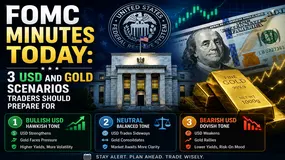
The Fed releases the July FOMC minutes on 19 August 2026. Here are three USD and gold scenarios, confirmation signals, and a practical risk checklist for traders.
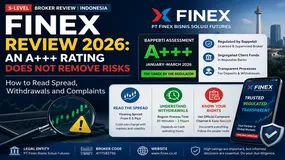
FINEX review 2026 for readers comparing an Indonesia forex broker: understand what Bappebti's A+++ rating does and does not show, then check floating spreads, withdrawals, segregated accounts and the complaint route for PT Finex Bisnis Solusi Futures.

Choosing a forex liquidity provider is not a search for the lowest displayed spread or the longest provider list. It is a broker decision about pricing integrity, depth, routing, credit, reporting, incident response, and client communication. This 2026 guide explains how a forex LP, FX liquidity provider, or liquidity provider forex arrangement fits into a broker’s execution chain; what to test before onboarding; why a “best forex liquidity provider” claim cannot replace due diligence; and how to compare cost beyond commission. Use the execution-quality scorecard, provider questions, routing scenarios, and 90-day onboarding plan to assess whether a liquidity relationship can support your actual client mix, instruments, risk model, and jurisdiction. The goal is not to make a universal ranking. It is to build evidence that your broker can explain, supervise, reconcile, and recover its execution service when market conditions are difficult.
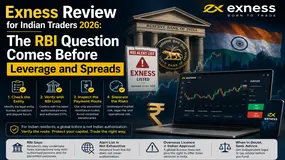
Exness review for Indian traders in 2026. This guide explains what the RBI Alert List says, what it does not say, why a global license is not Indian authorization, and how to verify permitted forex routes before funding an account.
WikiFXWikiFXWikiFXWikiFXWikiFXWikiFXWikiFXWikiFXWikiFXWikiFX