


FOMC Minutes Today: 3 USD and Gold Scenarios Traders Should Prepare For
The Fed releases the July FOMC minutes on 19 August 2026. Here are three USD and gold scenarios, confirmation signals, and a practical risk checklist for traders.
Original

简体中文
繁體中文
English
Pусский
日本語
ภาษาไทย
Tiếng Việt
Bahasa Indonesia
Español
हिन्दी
Filippiiniläinen
Français
Deutsch
Português
Türkçe
한국어
العربية
اردو




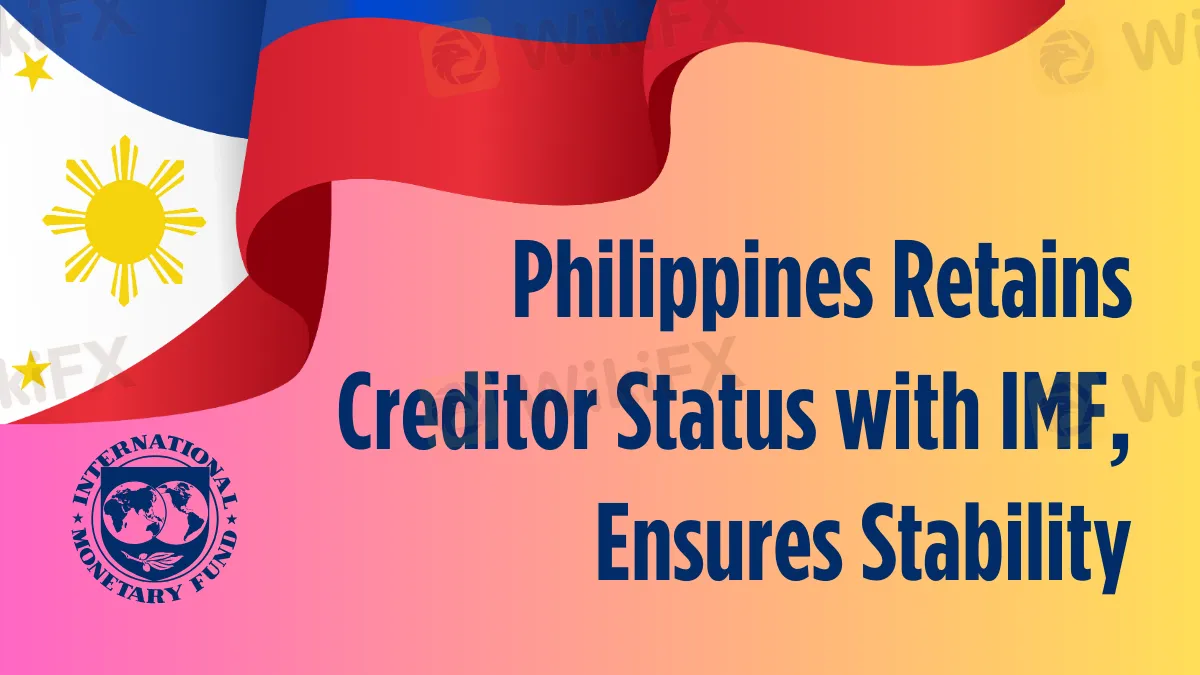
Abstract:The Philippines maintains its IMF net creditor status, reflecting strong economic fundamentals and solidifying its global financial standing until 2025.
 Contents
The Philippines has maintained its net creditor status with the International Monetary Fund (IMF), demonstrating the country's solid economic fundamentals and resiliency. This accomplishment demonstrates the Philippines' dedication to maintaining a strong financial position while also contributing to global economic stability. The Bangko Sentral ng Pilipinas (BSP) issued this declaration, emphasizing the country's capacity to weather foreign shocks while maintaining a good economic outlook.
The Philippines will continue to participate in the IMF's Financial Transactions Plan (FTP) until December 2025. This involvement reinforces the Philippines' status as a vital contributor to the global financial safety net and demonstrates its capacity to sustain a stable economy.
According to the Philippine Business Times, “The Philippines' strong external position supports the country's development goals which will be beneficial to the Filipino public.” This statement highlights the direct advantages of the Philippines' strong financial position to the country's overall development and economic progress.
Since 1956, the Philippines has been a regular member of the IMF, and it has progressed from borrower to net creditor. This change was made official in 2010 when the BSP became a creditor member of the IMF's FTP. This transition represents the Philippines' increasing importance in the global financial system, as well as its potential to assist other countries in times of need.
The IMF's FTP is a currency exchange agreement that aids the IMF's lending operations to member nations. The Philippines participates in the IMF by providing financial resources in exchange for interest payments. This not only boosts the Philippines' overseas reserves but also enables the country to play an important role in ensuring global financial stability.

To participate in the IMF's FTP, nations like the Philippines must fulfill a number of requirements, including a good balance of payments, stable market conditions, and enough foreign reserves to cover external commitments. The Philippines continues to achieve these criteria, assuring its continued participation in the program.
The Philippine Bureau of Statistics said, “Given that the Philippines' external position remains strong, with ample gross international reserves to withstand external shocks, the country has been assessed to be eligible for continued participation in the FTP.” This strong financial situation is a significant reason why the Philippines can continue to play an important role in the IMF's worldwide activities.
By keeping its creditor status, the Philippines cements its position as an important financial partner in the IMF's efforts to ensure global economic stability. The country's membership in the FTP demonstrates its commitment to assisting other countries while also ensuring its own economic future.
It noted, “This puts the Philippines in a favorable position to remain as a Fund financial partner, which is an indication of the country's commitment to contribute to the global financial safety nets and support the resolution of possible crises.” This position illustrates the Philippines' capacity to preserve its economy while simultaneously contributing to the global economy.
The Philippines' continued creditor position with the IMF reflects the country's robust economic basis and resilience. This approach assures that the Philippines is ready to deal with future economic shocks while also promoting domestic growth and development. The Philippines' participation in the IMF's FTP displays its capacity to efficiently manage its finances while also contributing to global economic stability.
The Philippines' solid external position, backed by significant foreign reserves, allows it to continue paying its financial responsibilities and supporting the IMF's global efforts. This performance is also good news for the Philippines' internal economy since it serves as a buffer against foreign shocks and promotes long-term economic development.
The Philippines' ability to maintain its creditor status with the IMF is a remarkable accomplishment that indicates its economic strength and resilience. The Philippines ensures national and international financial stability by being a participant in the IMF's Financial Transactions Plan. This success strengthens the country's position as a significant participant in the global financial scene, contributing to global economic safety nets while maintaining domestic prosperity and stability. The Philippines' continuous participation in the IMF demonstrates its commitment to global financial growth and the well-being of its people.
Philippines financial related news:
Get the latest on the Philippines' economic resilience and IMF creditor status. Visit WikiFX News now!

Disclaimer:
The views in this article only represent the author's personal views, and do not constitute investment advice on this platform. This platform does not guarantee the accuracy, completeness and timeliness of the information in the article, and will not be liable for any loss caused by the use of or reliance on the information in the article.
The Fed releases the July FOMC minutes on 19 August 2026. Here are three USD and gold scenarios, confirmation signals, and a practical risk checklist for traders.
FINEX review 2026 for readers comparing an Indonesia forex broker: understand what Bappebti's A+++ rating does and does not show, then check floating spreads, withdrawals, segregated accounts and the complaint route for PT Finex Bisnis Solusi Futures.
Choosing a forex liquidity provider is not a search for the lowest displayed spread or the longest provider list. It is a broker decision about pricing integrity, depth, routing, credit, reporting, incident response, and client communication. This 2026 guide explains how a forex LP, FX liquidity provider, or liquidity provider forex arrangement fits into a broker’s execution chain; what to test before onboarding; why a “best forex liquidity provider” claim cannot replace due diligence; and how to compare cost beyond commission. Use the execution-quality scorecard, provider questions, routing scenarios, and 90-day onboarding plan to assess whether a liquidity relationship can support your actual client mix, instruments, risk model, and jurisdiction. The goal is not to make a universal ranking. It is to build evidence that your broker can explain, supervise, reconcile, and recover its execution service when market conditions are difficult.
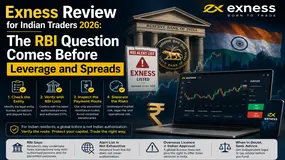
Exness review for Indian traders in 2026. This guide explains what the RBI Alert List says, what it does not say, why a global license is not Indian authorization, and how to verify permitted forex routes before funding an account.
WikiFXWikiFXWikiFXWikiFXWikiFXWikiFXWikiFXWikiFXWikiFXWikiFX