


FOMC Minutes Today: 3 USD and Gold Scenarios Traders Should Prepare For
The Fed releases the July FOMC minutes on 19 August 2026. Here are three USD and gold scenarios, confirmation signals, and a practical risk checklist for traders.
Original

简体中文
繁體中文
English
Pусский
日本語
ภาษาไทย
Tiếng Việt
Bahasa Indonesia
Español
हिन्दी
Filippiiniläinen
Français
Deutsch
Português
Türkçe
한국어
العربية
اردو




Abstract:Binance is facing a new class-action lawsuit from three cryptocurrency investors who allege that the exchange failed to prevent money laundering, leading to the theft and untraceability of their digital assets.

Binance, one of the worlds largest cryptocurrency exchanges, and its former CEO, Changpeng “CZ” Zhao, are embroiled in a series of legal challenges that highlight the regulatory pressures facing the crypto industry.
Binance is facing a new class-action lawsuit from three cryptocurrency investors who allege that the exchange failed to prevent money laundering, leading to the theft and untraceability of their digital assets. The lawsuit, filed in the United States District Court for the Western District of Washington, claims that thieves used Binance to launder stolen cryptocurrency, making it difficult for authorities to recover the assets. The plaintiffs argue that blockchain technology‘s inherent transparency and traceability should have enabled the recovery of their funds, but Binance’s alleged facilitation of money laundering thwarted this possibility.

The lawsuit also claims that Binances actions violate the Racketeer Influenced and Corrupt Organizations (RICO) Act, a law traditionally used to combat organized crime. Bill Hughes, senior counsel at Consensys, expressed scepticism about the plaintiffs' ability to prove their case. However, he noted that if the lawsuit progresses to discovery or trial, it could have significant ramifications for the crypto industry, particularly in terms of blockchain analytics and asset recovery.
Binance has already faced scrutiny and penalties from various global regulators. In India, the Financial Intelligence Unit (FIU) imposed a fine of 188.2 million rupees ($2.25 million) on Binance for operating in violation of local anti-money laundering (AML) regulations. Additionally, Canadas anti-money laundering agency fined the exchange $4.38 million in May for similar violations.
Changpeng Zhao, Binances former CEO, has also been at the centre of legal issues. In November 2023, Zhao pleaded guilty to violating U.S. money laundering laws and the Bank Secrecy Act (BSA), leading to his resignation from Binance as part of a settlement. Zhao, a Canadian citizen, was sentenced to four months in a low-security federal prison in California, significantly shorter than the three-year sentence sought by prosecutors but still notable given his high profile in the crypto world.
Zhaos sentence is set to conclude on September 29, 2024, but he has recently been transferred to an administrative facility in the Greater Los Angeles area, potentially signalling a transition to a residential re-entry program. Despite online speculation about his early release, Zhao remains incarcerated, with his release date still listed as September 29 on the U.S. Federal Bureau of Prisons (BOP) website.
As part of the settlement, Binance agreed to pay $4.3 billion in civil regulatory penalties, and Zhao has been barred from holding any executive position at a cryptocurrency firm in the future. Zhao, with a net worth of $36.5 billion according to Bloomberg, is potentially the wealthiest person ever incarcerated in the United States. In addition to his prison sentence, Zhao was fined $50 million.
The ongoing legal and regulatory challenges faced by Binance and its former CEO underscore the growing scrutiny on the cryptocurrency industry. As authorities around the world tighten regulations, the actions and policies of major players like Binance will likely continue to be closely monitored. The outcome of these legal battles could set significant precedents for how the industry operates and how regulators enforce compliance with financial laws.

Disclaimer:
The views in this article only represent the author's personal views, and do not constitute investment advice on this platform. This platform does not guarantee the accuracy, completeness and timeliness of the information in the article, and will not be liable for any loss caused by the use of or reliance on the information in the article.
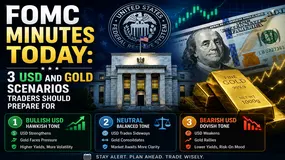
The Fed releases the July FOMC minutes on 19 August 2026. Here are three USD and gold scenarios, confirmation signals, and a practical risk checklist for traders.
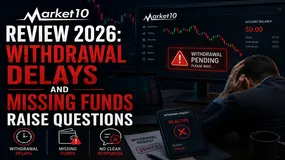
Has your trading experience with Market10, a South Africa-based brokerage entity, been miserable? Did you fail to receive funds in your trading account despite approvals on the Market10 login dashboard? Did the broker constantly push you into depositing while withholding your earlier funds? In this Market10 review, we have shed light on the growing allegations against the broker. Additionally, we have provided an overview of the broker’s regulatory status.
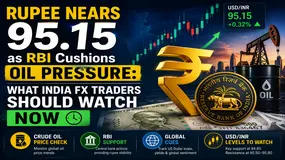
India's rupee is expected to open near 95.14-95.16 per US dollar after closing at 95.2075 on Friday, while Brent crude was quoted at $84.50 and RBI market presence supported the currency. This report separates a reported market intervention from a fixed exchange-rate target, explains why oil, US employment data and Federal Reserve expectations matter, and gives a practical risk checklist for forex trading India. It also explains why volatility is not a reason to trust unverified online forex trading platforms.
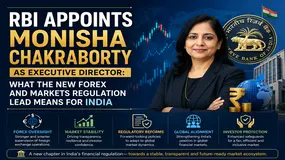
The Reserve Bank of India has appointed Monisha Chakraborty as Executive Director with effect from 3 August 2026; she will oversee the Foreign Exchange Department and the Financial Markets Regulation Department. Chakraborty is a career central banker with over three decades of experience in Supervision, Foreign Exchange, and Government and Bank Accounts, and previously served as Banking Ombudsman. This report explains the significance of the new RBI Executive Director appointment for forex regulation India, the scope of the Foreign Exchange Department and the Financial Markets Regulation Department, and what authorised persons, banks, and forex market participants should monitor as the new ED takes charge.
WikiFXWikiFXWikiFXWikiFXWikiFXWikiFXWikiFXWikiFXWikiFXWikiFX