


FOMC Minutes Today: 3 USD and Gold Scenarios Traders Should Prepare For
The Fed releases the July FOMC minutes on 19 August 2026. Here are three USD and gold scenarios, confirmation signals, and a practical risk checklist for traders.
Original

简体中文
繁體中文
English
Pусский
日本語
ภาษาไทย
Tiếng Việt
Bahasa Indonesia
Español
हिन्दी
Filippiiniläinen
Français
Deutsch
Português
Türkçe
한국어
العربية
اردو




Abstract:PayPal's stablecoin PYUSD has surpassed a $1 billion market cap, driven by its expansion to Solana, positioning it as a significant player in the crypto space.
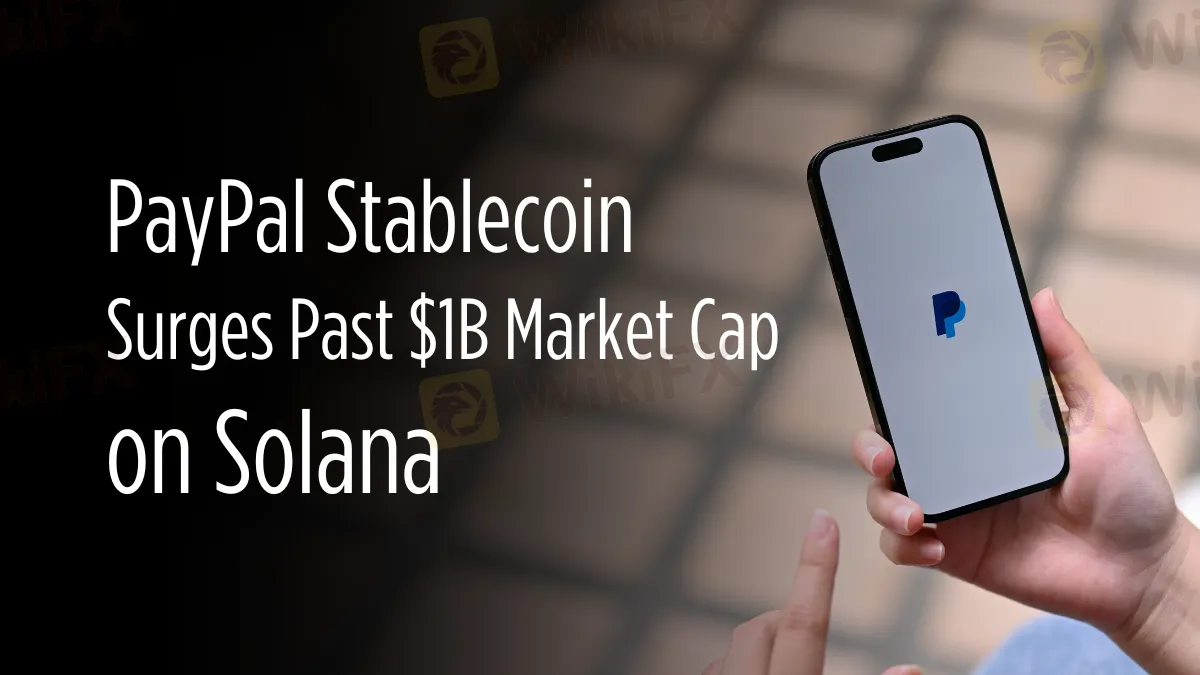
PayPal's stablecoin, PYUSD, has made significant gains in the cryptocurrency market, recently topping $1 billion in market value. This tremendous development demonstrates the growing importance of stablecoin, notably in the Philippines, where digital transactions are becoming more popular.
 Contents
When PayPal originally released PYUSD, it was seen as a possible game changer in the cryptocurrency market. However, the first reaction on the Ethereum network could have been more enthusiastic, and the token's growth could have been more robust. Things didn't improve until late May when PayPal decided to extend PYUSD to the Solana network.
The choice to merge PYUSD and Solana proved to be a masterstroke. Within three months, the supply of PYUSD for Solana increased from zero to $650 million. This quick rise not only exceeded the supply on Ethereum but also established PYUSD as a serious competitor to existing stablecoins like Tether's USDT. According to DefiLlama statistics, PYUSD's supply of Solana increased by an astonishing 171% in the last month, representing a major milestone in PayPal's crypto goals.
One of the primary drivers of this development is PYUSD's inclusion with different decentralized finance (DeFi) protocols on Solana. Platforms such as Kamino, Drift, and Marginfi have provided increased returns for PYUSD deposits, attracting a huge number of customers. Anchorage Digital, a crypto custody service, has also given incentives for institutional deposits in PYUSD, increasing the stablecoin's attractiveness.

Despite its quick rise, there are questions regarding the long-term viability of PYUSD's development, particularly when these incentives are removed. However, the stablecoin's great performance on Solana, as well as its increasing popularity on controlled exchanges like Crypto.com and decentralized financial protocols like Curve and Frax, point to a bright future.
PYUSD supply has increased by 97% in the last month alone, propelling PayPal into the top 10 stablecoin issuers globally. With Tether USD dominating the niche with over 112 billion tokens in circulation, PYUSD's ascent is especially significant. On Ethereum, Paxos has the most PYUSD tokens, with 112 million, followed by Crypto.com, Defiance Capital, BitGo, and Curve.
As PYUSD gains traction, its impact in the Philippines and other developing nations is projected to rise, cementing PayPal's position as a significant participant in the global cryptocurrency industry.
PayPal's cryptocurrency, PayPal USD (PYUSD), has just entered the Philippine market via a strategic relationship with GCash, a digital wallet and financial software supported by Globe. This decision represents a huge step forward in the integration of cryptocurrencies into Filipinos' everyday life.
GCash has announced that its customers may now access PYUSD via the GCrypto feature, an in-app service powered by PDAX. This allows GCash users to purchase, sell, or keep PYUSD tokens, giving them the advantage of quick, secure transactions with low price fluctuation. The integration of PYUSD on the GCash platform takes PayPal's use of numerous blockchains, including Solana, which is noted for its speed and cheap transaction fees.
Kenneth Chua, PDAX's Chief Business Development Officer, said that this project provides new options for Filipinos to use cryptocurrencies in realistic, daily circumstances. Winsley Bangit, Vice President and Group Head of New Businesses at GCash emphasized the company's commitment to inclusivity and economic growth, stating that digital finance, when combined with cryptocurrency, can help bridge the gap for unbanked and underbanked populations, fostering a more inclusive economy.
Learn how PayPal's PYUSD is transforming the crypto market in the Philippines. Get the full story on the news.html" target="_self" style="color: rgb(46, 82, 153);">WikiFX News page now!

Disclaimer:
The views in this article only represent the author's personal views, and do not constitute investment advice on this platform. This platform does not guarantee the accuracy, completeness and timeliness of the information in the article, and will not be liable for any loss caused by the use of or reliance on the information in the article.
The Fed releases the July FOMC minutes on 19 August 2026. Here are three USD and gold scenarios, confirmation signals, and a practical risk checklist for traders.

India's rupee is expected to open near 95.14-95.16 per US dollar after closing at 95.2075 on Friday, while Brent crude was quoted at $84.50 and RBI market presence supported the currency. This report separates a reported market intervention from a fixed exchange-rate target, explains why oil, US employment data and Federal Reserve expectations matter, and gives a practical risk checklist for forex trading India. It also explains why volatility is not a reason to trust unverified online forex trading platforms.

The Reserve Bank of India has appointed Monisha Chakraborty as Executive Director with effect from 3 August 2026; she will oversee the Foreign Exchange Department and the Financial Markets Regulation Department. Chakraborty is a career central banker with over three decades of experience in Supervision, Foreign Exchange, and Government and Bank Accounts, and previously served as Banking Ombudsman. This report explains the significance of the new RBI Executive Director appointment for forex regulation India, the scope of the Foreign Exchange Department and the Financial Markets Regulation Department, and what authorised persons, banks, and forex market participants should monitor as the new ED takes charge.
RBI's concessional forex swap facility had mobilised $40.82 billion by 31 July 2026, with FCNR(B) deposits providing $36.725 billion of the total. This India-focused analysis separates confirmed inflows from the $80–85 billion SBI Research projection, compares the 2026 programme with the 2013 FCNR(B) window, and explains what the numbers can—and cannot—do for the Indian rupee. It also shows how banks, NRI depositors, importers, exporters and institutional investors may be affected, while highlighting the oil, dollar, maturity and hedging risks that still matter for USD/INR and forex trading in India.
WikiFXWikiFXWikiFXWikiFXWikiFXWikiFXWikiFXWikiFXWikiFXWikiFX