


FOMC Minutes Today: 3 USD and Gold Scenarios Traders Should Prepare For
The Fed releases the July FOMC minutes on 19 August 2026. Here are three USD and gold scenarios, confirmation signals, and a practical risk checklist for traders.
Original

简体中文
繁體中文
English
Pусский
日本語
ภาษาไทย
Tiếng Việt
Bahasa Indonesia
Español
हिन्दी
Filippiiniläinen
Français
Deutsch
Português
Türkçe
한국어
العربية
اردو




Abstract:PayPal's PYUSD stablecoin can now transfer across Ethereum and Solana, enhancing flexibility for users through a LayerZero cross-chain integration.

PayPal‘s USD-backed stablecoin, PYUSD, now has expanded transfer capabilities across the Ethereum and Solana blockchains, marking a significant milestone for the digital finance sector. Thanks to an integration with LayerZero’s cross-chain protocol, users can seamlessly transfer PYUSD across these two major networks, supporting increased autonomy for those who self-custody their tokens. With this upgrade, PYUSD holders are no longer limited to centralized platforms like PayPal or Venmo for transactions.
LayerZero‘s Omnichain Fungible Token (OFT) Standard enables this new level of functionality, making the cross-chain transfers not only possible but also highly flexible for end-users. This advancement aligns with PayPal’s overarching vision for PYUSD, as highlighted by Jose Fernandez da Ponte, Senior Vice President of Blockchain and Digital Currencies at PayPal. “We believe that PYUSD holders will welcome the flexibility and convenience offered by LayerZero,” da Ponte shared, underscoring PayPals goal of making PYUSD a versatile tool within the broader digital finance landscape.
This cross-chain integration is part of PayPal‘s broader strategy to expand PYUSD’s ecosystem and boost its adoption among users. PYUSD experienced a peak market capitalization of $1 billion earlier this year, though recent data from DeFiLlama shows a decline to $513 million. As of now, $384 million of PYUSDs market cap exists on Ethereum, while $166 million is on Solana, reflecting fluctuating market demands.

In line with this expansion, PayPal has actively built partnerships to broaden PYUSD‘s reach and usability. Earlier collaborations include a joint effort with Anchorage Digital, where users storing PYUSD with the crypto custodian could earn rewards. Additionally, in May, PayPal integrated PYUSD into Solana’s ecosystem through partnerships with major crypto platforms such as Crypto.com, Phantom, and Paxos. These integrations enable users to convert easily between fiat and digital assets, making PYUSD an appealing option in the competitive stablecoin market.
Despite these efforts, PYUSD remains relatively modest in market size compared to stablecoin giants like Tether (USDT) and USD Coin (USDC), which command market caps of $118 billion and $35 billion, respectively. However, PayPals initiatives indicate a steady commitment to establishing PYUSD as a key player in the digital currency space.
The expansion of PYUSDs functionality comes amid an evolving regulatory landscape. With the stablecoin market largely unregulated and carrying a combined market cap exceeding $140 billion, some U.S. lawmakers are calling for a structured approach. Senators Cynthia Lummis and Kirsten Gillibrand recently proposed legislation targeting stablecoin regulation. Their bill suggests operational requirements for issuers and mandates that stablecoins be redeemable for USD, aiming to provide clarity around their use as payment assets rather than securities.
Under the proposed U.S. legislation, eligible issuers would need to establish subsidiaries dedicated to stablecoin issuance and be supervised by the Federal Reserve or other state and federal regulatory bodies.
Meanwhile, other countries are also progressing on regulatory fronts. The UK is expected to enact stablecoin regulations within months, while Singapore has already established formal regulatory requirements.
Final Thoughts
PayPal‘s latest expansion for PYUSD highlights the company’s drive to create a seamless and versatile digital currency. While PYUSDs market cap remains smaller than those of its largest competitors, these incremental improvements position it for future growth. As regulatory frameworks for stablecoins take shape globally, stablecoin providers like PayPal are likely to benefit from increased market clarity and confidence, fostering a more secure and mainstream-ready ecosystem for digital finance.

Disclaimer:
The views in this article only represent the author's personal views, and do not constitute investment advice on this platform. This platform does not guarantee the accuracy, completeness and timeliness of the information in the article, and will not be liable for any loss caused by the use of or reliance on the information in the article.
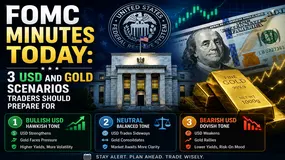
The Fed releases the July FOMC minutes on 19 August 2026. Here are three USD and gold scenarios, confirmation signals, and a practical risk checklist for traders.
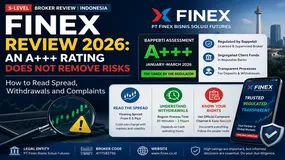
FINEX review 2026 for readers comparing an Indonesia forex broker: understand what Bappebti's A+++ rating does and does not show, then check floating spreads, withdrawals, segregated accounts and the complaint route for PT Finex Bisnis Solusi Futures.

Choosing a forex liquidity provider is not a search for the lowest displayed spread or the longest provider list. It is a broker decision about pricing integrity, depth, routing, credit, reporting, incident response, and client communication. This 2026 guide explains how a forex LP, FX liquidity provider, or liquidity provider forex arrangement fits into a broker’s execution chain; what to test before onboarding; why a “best forex liquidity provider” claim cannot replace due diligence; and how to compare cost beyond commission. Use the execution-quality scorecard, provider questions, routing scenarios, and 90-day onboarding plan to assess whether a liquidity relationship can support your actual client mix, instruments, risk model, and jurisdiction. The goal is not to make a universal ranking. It is to build evidence that your broker can explain, supervise, reconcile, and recover its execution service when market conditions are difficult.
Crypto trading revenue weakened across major platforms in Q2 2026 as market activity slowed, while another crypto-focused platform expanded into forex and CFD products, highlighting a broader shift toward multi-asset trading.
WikiFXWikiFXWikiFXWikiFXWikiFXWikiFXWikiFXWikiFXWikiFXWikiFX