


FOMC Minutes Today: 3 USD and Gold Scenarios Traders Should Prepare For
The Fed releases the July FOMC minutes on 19 August 2026. Here are three USD and gold scenarios, confirmation signals, and a practical risk checklist for traders.
Original

简体中文
繁體中文
English
Pусский
日本語
ภาษาไทย
Tiếng Việt
Bahasa Indonesia
Español
हिन्दी
Filippiiniläinen
Français
Deutsch
Português
Türkçe
한국어
العربية
اردو




Abstract:FV Bank supports USDT deposits to reduce fees and speed up cross-border payments. Discover how stablecoins are reshaping global transactions and banking.
 Contents
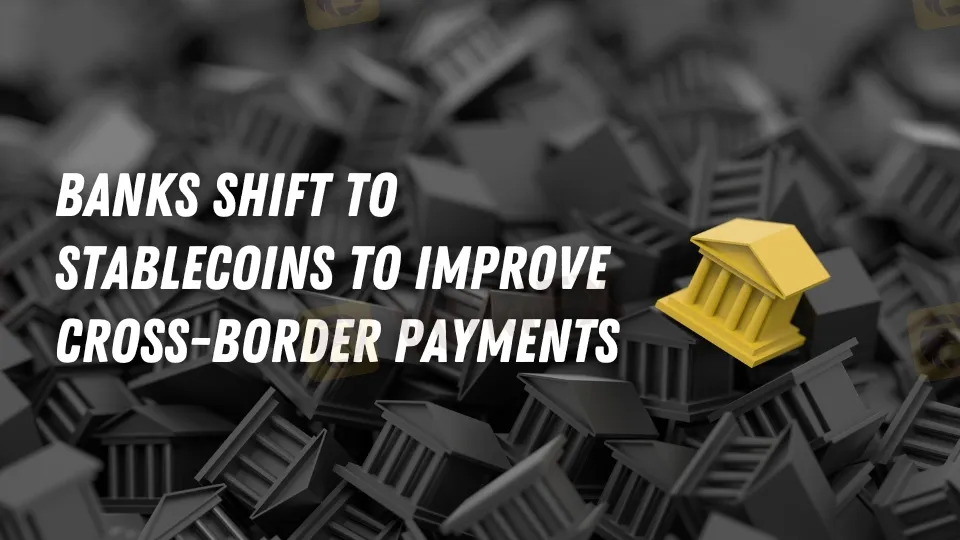
Cross-border payments have long been a barrier for worldwide transactions, characterized by high costs, poor processing times, and convoluted processes. However, a notable milestone occurred Thursday (Dec. 5), when U.S.-licensed FV Bank announced that direct USDT stablecoin deposits for international transactions are now supported. This move aims to make cross-border payments more efficient by eliminating the need for traditional wire transfers, lowering fees, and shortening processing times.
“This innovation positions us at the forefront of regulated financial institutions offering comprehensive stablecoin on-ramp and off-ramp services. Weve also integrated blockchain analytics tools to screen for AML and sanctions risks, ensuring regulatory compliance,” said Miles Paschini, CEO of FV Bank.
Paschini underlined that FV Bank's USDT direct deposit service is useful for both large-volume and small-scale foreign payments. This technology, which eliminates traditional bank wires, provides a faster, cheaper, and more transparent alternative to standard banking systems.
The existing cross-border payments system has long been a source of frustration, with high fees, slow processing times, and a reliance on several middlemen. Stablecoins, on the other hand, offer an appealing alternative by enabling near-instantaneous, low-cost transfers with increased transparency owing to blockchain technology.
Despite its advantages, moving cash between stablecoins and fiat currencies has proved difficult. On-ramp and off-ramp firms are now stepping in to bridge the gap, allowing consumers to quickly change stablecoins into regular money. Banks have a critical decision: change with the changing world or risk losing relevance.

The integration of stablecoin services into conventional financial systems has the potential to challenge banks' primary role of processing money transfers and conversions. If stablecoins become the preferred way for international payments, firms and consumers may turn to digital assets instead of traditional banking channels, cutting income from foreign exchange and remittance costs.
According to Sheraz Shere, General Manager of Payments at the Solana Foundation, “Blockchain solutions and stablecoins— theyve found product-market fit in cross-border payments. You get disintermediation, speed, transparency, and low cost.”
Regardless of the possible hazards, banks have a unique chance to integrate new technologies into their operations. Banks may position themselves as gateways to the digital economy and generate new income streams such as transaction fees and digital asset services by cooperating with stablecoin issuers or establishing proprietary on-ramps.
Stablecoins provide a mechanism for small and medium-sized companies (SMBs) to reduce payment expenses and increase cash flow. Similarly, remittances, which help millions of families throughout the world, may become more inexpensive and accessible.
While blockchain-based solutions are gaining popularity, regulatory issues remain a substantial impediment. Governments and central banks want to keep monetary policy under control while prohibiting criminal activity like money laundering.
In its 2024 annual report, the Financial Stability Oversight Council (FSOC) in the United States emphasized the growing use of blockchain-based solutions for cross-border payments. However, regulatory organizations are concerned that these developments follow existing financial regulations and safeguard the global financial system's integrity.
As the financial sector adopts stablecoins and blockchain technology, cross-border payments appear to have a bright future. Banks play a vital role in negotiating regulatory hurdles while incorporating these digital assets into their offerings. If broadly used, stablecoins might drastically cut the costs, time, and complexity of international transactions, benefiting both businesses and consumers. The next step will be to ensure that these technologies perform effortlessly inside the current regulatory frameworks.

Disclaimer:
The views in this article only represent the author's personal views, and do not constitute investment advice on this platform. This platform does not guarantee the accuracy, completeness and timeliness of the information in the article, and will not be liable for any loss caused by the use of or reliance on the information in the article.
The Fed releases the July FOMC minutes on 19 August 2026. Here are three USD and gold scenarios, confirmation signals, and a practical risk checklist for traders.
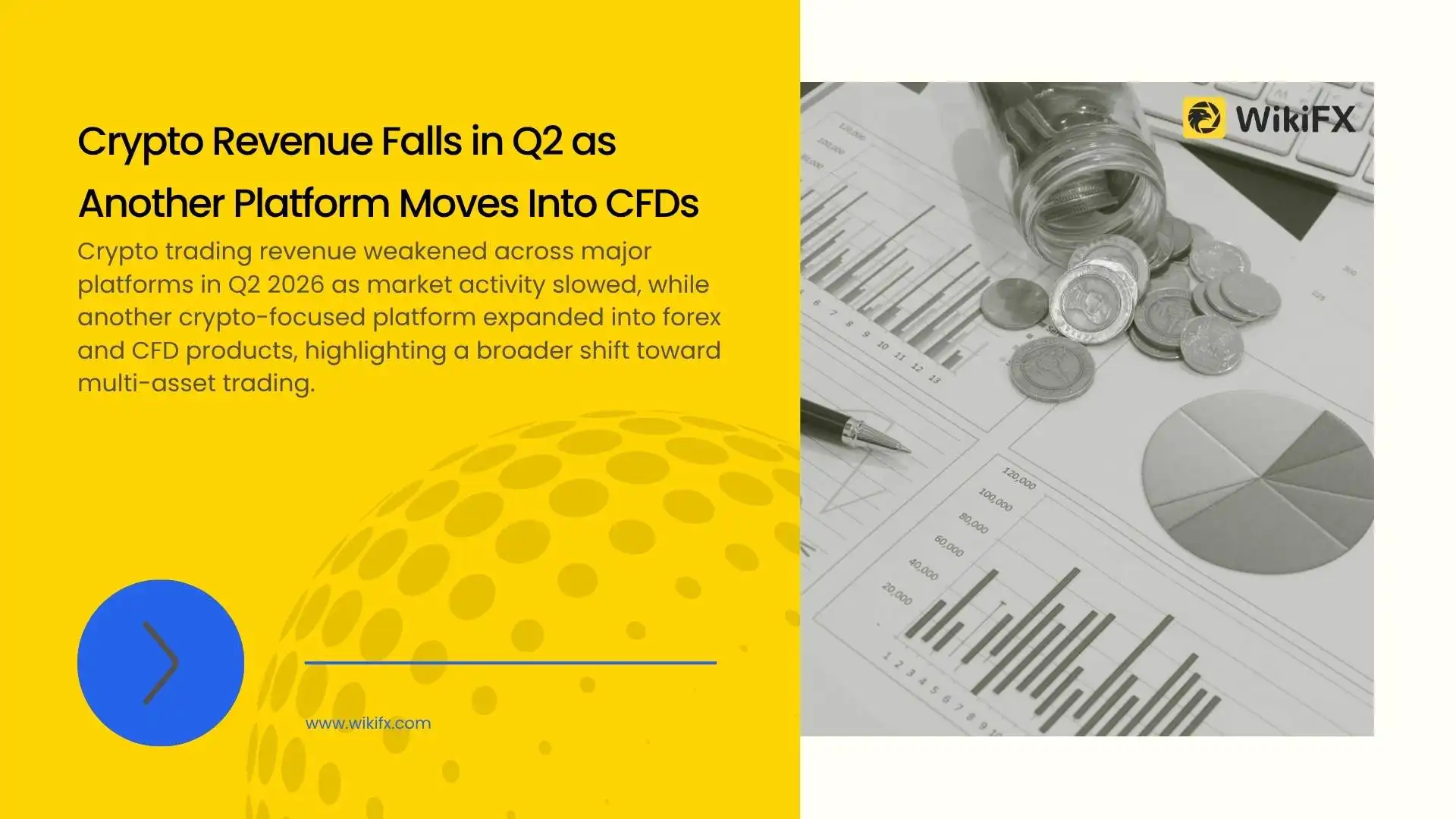
Crypto trading revenue weakened across major platforms in Q2 2026 as market activity slowed, while another crypto-focused platform expanded into forex and CFD products, highlighting a broader shift toward multi-asset trading.

Has your trading experience with Market10, a South Africa-based brokerage entity, been miserable? Did you fail to receive funds in your trading account despite approvals on the Market10 login dashboard? Did the broker constantly push you into depositing while withholding your earlier funds? In this Market10 review, we have shed light on the growing allegations against the broker. Additionally, we have provided an overview of the broker’s regulatory status.
India's rupee is expected to open near 95.14-95.16 per US dollar after closing at 95.2075 on Friday, while Brent crude was quoted at $84.50 and RBI market presence supported the currency. This report separates a reported market intervention from a fixed exchange-rate target, explains why oil, US employment data and Federal Reserve expectations matter, and gives a practical risk checklist for forex trading India. It also explains why volatility is not a reason to trust unverified online forex trading platforms.
WikiFXWikiFXWikiFXWikiFXWikiFXWikiFXWikiFXWikiFXWikiFXWikiFX