


FOMC Minutes Today: 3 USD and Gold Scenarios Traders Should Prepare For
The Fed releases the July FOMC minutes on 19 August 2026. Here are three USD and gold scenarios, confirmation signals, and a practical risk checklist for traders.
Original

简体中文
繁體中文
English
Pусский
日本語
ภาษาไทย
Tiếng Việt
Bahasa Indonesia
Español
हिन्दी
Filippiiniläinen
Français
Deutsch
Português
Türkçe
한국어
العربية
اردو




Abstract:Making a profit in forex trading is definitely possible, but it's not an easy task. Many traders face losses at the beginning because they don't fully understand how the market works and enter without proper knowledge.

Those who succeed in forex trading usually master some basic skills and continuously optimize their trading strategies through practice. Here are some key factors that successful traders possess, and the reasons they avoid making mistakes:
Sufficient Knowledge: Many beginners start trading without fully learning the fundamentals of forex trading. They don't realize that forex trading isn't just about guessing market directions. It's important to understand strategies , risk management, and how to use the relevant tools. Understanding technical analysis, fundamental analysis, and risk management is the foundation of success.
Proper Use of Leverage: Leverage is a double-edged sword. While it can amplify profits, it also magnifies losses. Many beginner traders become too aggressive with leverage, leading to bankruptcy. Successful traders know how to use leverage cautiously, ensuring that trading risks remain manageable. They start small and accumulate experience over time.
Effective Risk Management: The success of forex trading often depends on a trader's ability to control risk. High risk might yield high returns in the short term, but it can also lead to unbearable losses. Wise traders keep their risk for each trade at around 1% to 2% of their account balance. Even with consecutive losses, this approach ensures that their capital stays intact, allowing them to wait for the next opportunity.
Patience for Long-term Profits: The forex market is not a “get-rich-quick” environment. Many traders chase short-term profits, only to take on excessive risk. Successful traders understand that forex trading is a marathon, not a sprint. They accumulate wealth through consistent small profits rather than waiting for one big success.
Adapting to Market Surprises: The forex market is full of uncertainty, and sudden price fluctuations can catch even experienced traders off guard. Successful traders understand that no trade is guaranteed to be perfect. They adjust their strategies flexibly based on market changes and accept the uncertainty, avoiding overconfidence.
1. Start with a demo account to familiarize yourself with the platform and gain practical experience.
2. Focus on risk management, controlling the risk of each trade and avoiding excessive leverage.
3. Stick to a clear trading plan and avoid making emotional decisions.
4. Be patient and accumulate profits gradually, instead of seeking quick gains.
5. Regularly review your trades, learn from them, and refine your trading strategies.
In conclusion, success in forex trading is not achieved overnight. It requires accumulating knowledge, managing risk, controlling emotions, and having the patience to wait. With continuous learning and practice, and by following the right strategies, making a profit is absolutely possible.

Disclaimer:
The views in this article only represent the author's personal views, and do not constitute investment advice on this platform. This platform does not guarantee the accuracy, completeness and timeliness of the information in the article, and will not be liable for any loss caused by the use of or reliance on the information in the article.
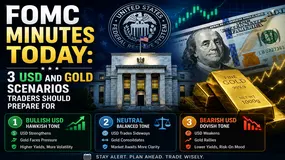
The Fed releases the July FOMC minutes on 19 August 2026. Here are three USD and gold scenarios, confirmation signals, and a practical risk checklist for traders.

A Prime of Prime forex arrangement can help a broker access trading relationships, credit intermediation, technology connectivity, and liquidity aggregation that may otherwise be difficult to obtain directly. But the label does not prove direct bank access, executable depth, or a particular execution outcome. This 2026 guide explains what a forex Prime of Prime, PoP liquidity provider, prime brokerage forex service, and forex prime broker proposal can mean in practice; where the credit and order-routing chain must be documented; how to test pricing, limits, rejects, records, and resilience; and which commercial terms create hidden operating cost. Use the comparison framework, red-flag list, and 90-day launch plan to assess fit for your client mix and risk model. The objective is a controllable execution dependency with traceable evidence, not a marketing claim about institutional access.
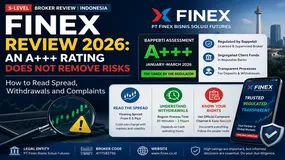
FINEX review 2026 for readers comparing an Indonesia forex broker: understand what Bappebti's A+++ rating does and does not show, then check floating spreads, withdrawals, segregated accounts and the complaint route for PT Finex Bisnis Solusi Futures.
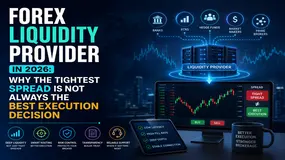
Choosing a forex liquidity provider is not a search for the lowest displayed spread or the longest provider list. It is a broker decision about pricing integrity, depth, routing, credit, reporting, incident response, and client communication. This 2026 guide explains how a forex LP, FX liquidity provider, or liquidity provider forex arrangement fits into a broker’s execution chain; what to test before onboarding; why a “best forex liquidity provider” claim cannot replace due diligence; and how to compare cost beyond commission. Use the execution-quality scorecard, provider questions, routing scenarios, and 90-day onboarding plan to assess whether a liquidity relationship can support your actual client mix, instruments, risk model, and jurisdiction. The goal is not to make a universal ranking. It is to build evidence that your broker can explain, supervise, reconcile, and recover its execution service when market conditions are difficult.
WikiFXWikiFXWikiFXWikiFXWikiFXWikiFXWikiFXWikiFXWikiFXWikiFX