


FOMC Minutes Today: 3 USD and Gold Scenarios Traders Should Prepare For
The Fed releases the July FOMC minutes on 19 August 2026. Here are three USD and gold scenarios, confirmation signals, and a practical risk checklist for traders.
Original

简体中文
繁體中文
English
Pусский
日本語
ภาษาไทย
Tiếng Việt
Bahasa Indonesia
Español
हिन्दी
Filippiiniläinen
Français
Deutsch
Português
Türkçe
한국어
العربية
اردو




Abstract:Central bank digital currencies (CBDCs) could reshape financial stability, addressing inflation, banking risks, and monetary policy challenges.
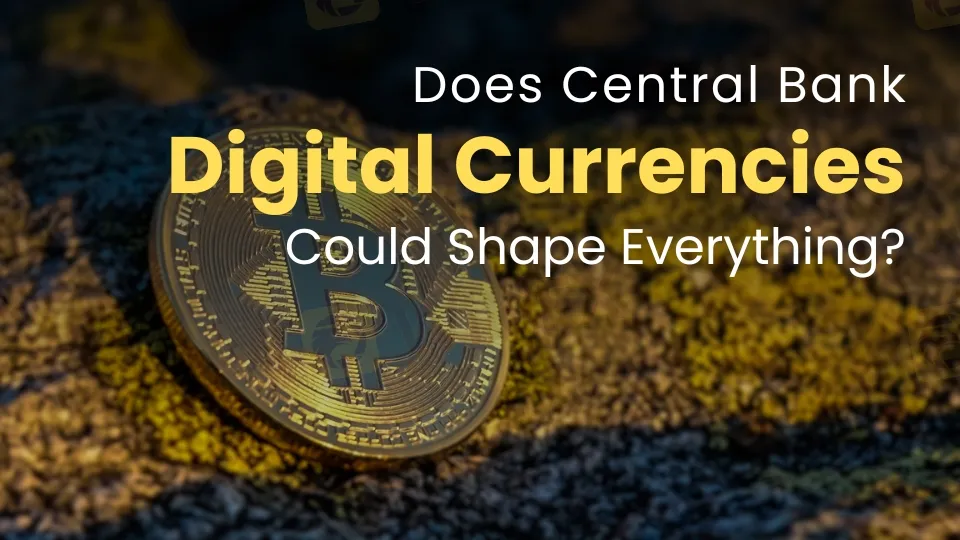
Christine Lagarde, President of the European Central Bank (ECB), recently spoke to parliamentarians with a combination of cautious optimism and worry. She added that while inflation is slowing, geopolitical threats and trade uncertainty remain significant. In the face of these hurdles, Lagarde reaffirmed her audacious goal of a digital euro. “Payments are the backbone of our economy,” she informed us, “and Europe cannot afford to be overly dependent on external providers.” Her statements highlight the rising need to achieve digital independence in a constantly changing global world.
Why Europe Needs a Digital Euro NOW
Lagarde's concerns are not just abstract. Cash usage in the eurozone has fallen, falling from 79% of in-store purchases in 2016 to 59% in 2022. In areas like Denmark, the trend is much more pronounced, with most people completely avoiding real money. Meanwhile, EU data reveals a disturbing trend: payment service providers rely extensively on foreign card systems, raising concerns about cost, competition, and control. When you include cryptocurrencies and geopolitical concerns, it's evident why a digital euro is more than just a technological update; it's a strategic move.
So, what exactly is a digital Euro? It's a central bank digital currency (CBDC), or digital twin of the euro, fully supported by the ECB. Unlike Bitcoin, it is legal money with equal value to its physical equivalent. It is not intended to replace cash, but rather to supplement it by providing a convenient digital payment option. That seems straightforward, doesn't it? Not exactly. The devil is in the details, and the stakes couldn't be greater.
Risks of a Digital Euro for Banks
Imagine a world in which the ECB provides free digital wallets that are simple, safe, and quick. Why bother dealing with a bank? Consider those wallets earning interest. Suddenly, storing your money there makes sense. Bank deposits might disappear, causing a bank run. In extreme cases, a badly built digital euro may render banks useless. That's not just a nuisance for bankers; it's a game changer for everyone.
Banks don't merely keep money; they also generate it through fractional reserve banking. If this is disrupted, the money supply may contract, stifling investment and growth. A Federal Reserve Board report delves further into these dangers, warning that CBDCs might rewrite the economic rules. Money is not static; it is molded by technology and politics, and the digital euro has the potential to alter both.

However, the ECB is not mindlessly pursuing this vision. A working paper suggests a conservative stance, with little interest in digital euros, rigorous holding restrictions, and an emphasis on maintaining the status quo. Your digital wallet and bank account would function together, with surplus cash automatically sent to your bank. Have you run out? Your bank may be able to help you out. It's a practical strategy for balancing innovation and stability in an era where cryptocurrencies challenge central bank authority.
Unlocking New Monetary Policy Tools
However, don't confuse prudence for inaction. A digital euro might enable daring new monetary policy instruments. Consider “helicopter money”—central banks depositing digital currency directly into wallets to stimulate expenditure.
Programmable CBDCs go a step further, providing stimulation with an expiry date or confined to certain transactions. The ECB even hinted at future enhancements, leaving the door open to possibilities that we cannot now forecast.
Then there is the electricity issue. Who determines the rules: central banks or elected officials? This argument is already raging in Europe, serving as a reminder that a digital euro is more than simply technology; it is politics, sovereignty, and money wrapped into one. Lagarde's effort comes as currency disappears, global rivalry heats up, and digital alternatives grow. The eurozone can't afford to fall behind.
Balancing Innovation and Stability
The stats back her up. Cash's drop isn't slowing—59% by 2022 might fall even more as attitudes change. Denmark's near-cashless society is not an aberration; it is a foreshadowing. Meanwhile, global payment giants deepen their grip, limiting Europe's influence. A digital euro might recoup part of that, keeping payments local and robust.
However, the hazards remain. A bank run is not a hypothetical possibility; it is a genuine threat if individuals abandon deposits in favor of digital wallets in large numbers. And if banks fail, the consequences may cripple economies. The ECB's limitations attempt to avoid that bullet, but execution is critical. If you do it wrong, the consequences might last decades.
On the other hand, the rewards might be revolutionary. Beyond legislative changes, a digital euro may protect Europe from external shocks such as trade wars or tech monopolies. It is a safeguard against a world in which cryptocurrencies compete with fiat currency and geopolitics threaten stability. Lagarde is not simply peddling a currency; she is banking on control in an unpredictable time.
For the time being, the ECB is acting cautiously. No interest, stockpiling, or disturbance. The potential is apparent. A digital euro may simplify payments, increase resilience, and reshape money itself. It's a delicate balance of innovation and tradition, freedom and monitoring. How it lands will have long-term consequences for the European economy and our lives.

Disclaimer:
The views in this article only represent the author's personal views, and do not constitute investment advice on this platform. This platform does not guarantee the accuracy, completeness and timeliness of the information in the article, and will not be liable for any loss caused by the use of or reliance on the information in the article.
The Fed releases the July FOMC minutes on 19 August 2026. Here are three USD and gold scenarios, confirmation signals, and a practical risk checklist for traders.
US wholesale inflation slowed sharply in July, encouraging investors to reduce their bets on another Federal Reserve rate hike. Dig beneath the headline, however, and persistent core price pressures suggest the inflation battle is not over.
India's rupee is expected to open near 95.14-95.16 per US dollar after closing at 95.2075 on Friday, while Brent crude was quoted at $84.50 and RBI market presence supported the currency. This report separates a reported market intervention from a fixed exchange-rate target, explains why oil, US employment data and Federal Reserve expectations matter, and gives a practical risk checklist for forex trading India. It also explains why volatility is not a reason to trust unverified online forex trading platforms.
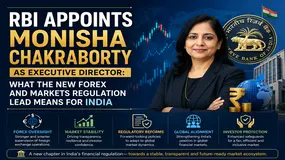
The Reserve Bank of India has appointed Monisha Chakraborty as Executive Director with effect from 3 August 2026; she will oversee the Foreign Exchange Department and the Financial Markets Regulation Department. Chakraborty is a career central banker with over three decades of experience in Supervision, Foreign Exchange, and Government and Bank Accounts, and previously served as Banking Ombudsman. This report explains the significance of the new RBI Executive Director appointment for forex regulation India, the scope of the Foreign Exchange Department and the Financial Markets Regulation Department, and what authorised persons, banks, and forex market participants should monitor as the new ED takes charge.
WikiFXWikiFXWikiFXWikiFXWikiFXWikiFXWikiFXWikiFXWikiFXWikiFX