


FOMC Minutes Today: 3 USD and Gold Scenarios Traders Should Prepare For
The Fed releases the July FOMC minutes on 19 August 2026. Here are three USD and gold scenarios, confirmation signals, and a practical risk checklist for traders.
Original

简体中文
繁體中文
English
Pусский
日本語
ภาษาไทย
Tiếng Việt
Bahasa Indonesia
Español
हिन्दी
Filippiiniläinen
Français
Deutsch
Português
Türkçe
한국어
العربية
اردو




Abstract:Bybit's Ben Zhou highlights the dangers of Pi Network, emphasizing transparency issues and the risks of crypto trading for inexperienced users.
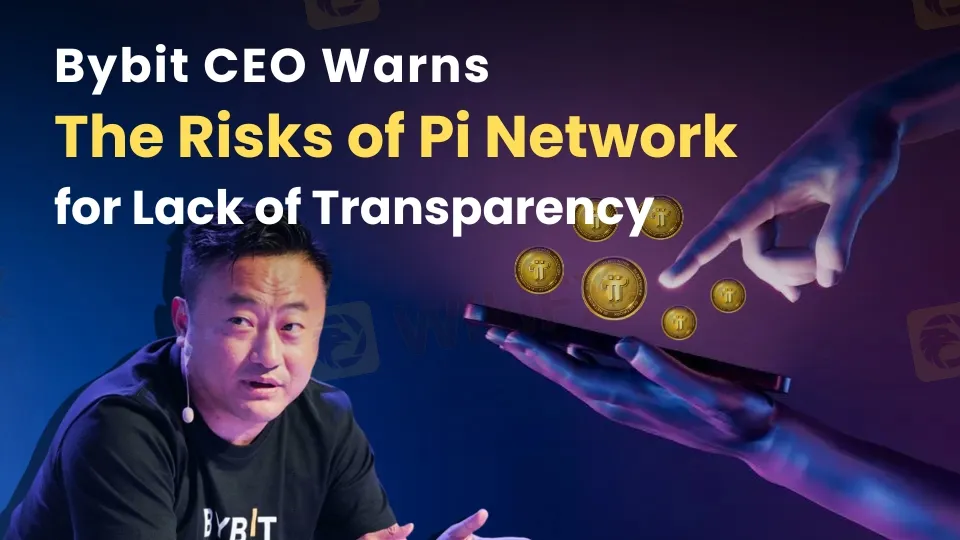
Bybit CEO Calls Pi Network a Threat to Inexperienced Crypto Users
In an interview with the Vietnamese newspaper VnExpress in February 2025, Ben Zhou, CEO of Bybit—a prominent cryptocurrency exchange—criticized the Pi Network project and its native cryptocurrency, $PI. Zhou explained why Bybit has no plans to list $PI, pointing out that many Pi Network members lack basic knowledge about cryptocurrency. “They‘re ’aunties and uncles,” he remarked, suggesting that they have little understanding of blockchain technology or its origins.
“Many people ask us: ‘Will Pi be on Bybit?’ Although we dont engage deeply with this project, we still conduct fundamental research on it, just like we do with other cryptocurrencies,” Zhou commented. His statements emphasized a cautious stance toward Pi Network, particularly aimed at individuals who may have been swayed by crypto summits or hype.
Reason #1: Lack of Transparency
Zhous primary critique of Pi Network is its lack of transparency, which he described as vague despite appearances to the contrary. His concerns come in the wake of a major hack targeting Bybit, which occurred after Pi Network launched on an open mainnet and $PI was listed on other exchanges. In that incident, over $1.46 billion was stolen from the Bybit platform, an attack attributed to the North Korean Lazarus Group.
Zhou stressed that the hack could have been far worse if not for Bybit‘s commitment to openness. “Transparency is critical in the crypto world,” he said, adding that Pi Network appeared opaque even at face value. Another red flag for Zhou was the absence of a visible development team. “The really weird part is you just don’t see the back-end team. They mention a ‘Stanford guy,’ but you never see them in real life or hear anything substantial,” he explained. Zhou suggested that the Pi Network team should hold regular discussions—perhaps via livestream—“so we can see what you actually want to build.” Instead, he claimed, the Pi Network team targeted Bybit with criticism rather than addressing these concerns.

Reason #2: No Roadmap, Missed Deadlines
Zhou also warned about Pi Network‘s failure to deliver on promised roadmaps and timelines. The project has repeatedly missed deadlines, leaving its system clunky and user-unfriendly, much to the disappointment of $PI miners who were promised a clear path to success. “Their ads claim, ’You only have to click here and you‘ll make a ton of money’—for free—but they dont explain how that works,” Zhou noted. He added that many users end up with nothing, experiencing occasional “drops” of value instead of real gains.
Drawing a comparison to meme coins, Zhou argued that Pi Network‘s mining campaign resembles a Ponzi scheme: early adopters may profit, while latecomers are left empty-handed. “It’s closer to a Ponzi structure than a sustainable model,” he said.
Reason #3: Targeting the Inexperienced
Zhou was particularly harsh in his assessment of Pi Network‘s user base, calling it “a generational pile of nonsense that has no concept of how hard money works.” He contrasted it with meme coin traders, whom he described as having at least some awareness of risk management. “Meme coin players know what they’re getting into and own their decisions. Pi Network, on the other hand, attracts users who dont understand the dangers,” Zhou explained. He labeled it a project that lures in “green hands”—newcomers to crypto—without providing proper education or safeguards.
Conclusion
Zhous comments highlight the warning signs surrounding Pi Network, suggesting its model poses significant risks, especially to inexperienced users. He emphasized that transparency, accountability, and responsible development are essential in the cryptocurrency industry. “A build-it-backward approach like Pi networks will struggle to earn trust from serious investors,” Zhou concluded, noting that the industry is evolving beyond such projects.

Disclaimer:
The views in this article only represent the author's personal views, and do not constitute investment advice on this platform. This platform does not guarantee the accuracy, completeness and timeliness of the information in the article, and will not be liable for any loss caused by the use of or reliance on the information in the article.
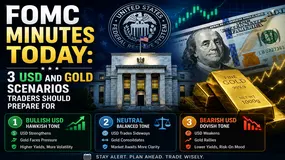
The Fed releases the July FOMC minutes on 19 August 2026. Here are three USD and gold scenarios, confirmation signals, and a practical risk checklist for traders.
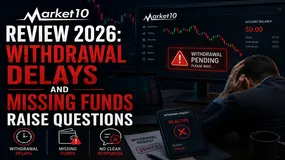
Has your trading experience with Market10, a South Africa-based brokerage entity, been miserable? Did you fail to receive funds in your trading account despite approvals on the Market10 login dashboard? Did the broker constantly push you into depositing while withholding your earlier funds? In this Market10 review, we have shed light on the growing allegations against the broker. Additionally, we have provided an overview of the broker’s regulatory status.

India's rupee is expected to open near 95.14-95.16 per US dollar after closing at 95.2075 on Friday, while Brent crude was quoted at $84.50 and RBI market presence supported the currency. This report separates a reported market intervention from a fixed exchange-rate target, explains why oil, US employment data and Federal Reserve expectations matter, and gives a practical risk checklist for forex trading India. It also explains why volatility is not a reason to trust unverified online forex trading platforms.
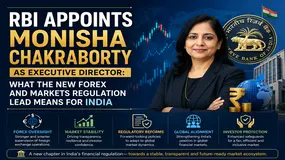
The Reserve Bank of India has appointed Monisha Chakraborty as Executive Director with effect from 3 August 2026; she will oversee the Foreign Exchange Department and the Financial Markets Regulation Department. Chakraborty is a career central banker with over three decades of experience in Supervision, Foreign Exchange, and Government and Bank Accounts, and previously served as Banking Ombudsman. This report explains the significance of the new RBI Executive Director appointment for forex regulation India, the scope of the Foreign Exchange Department and the Financial Markets Regulation Department, and what authorised persons, banks, and forex market participants should monitor as the new ED takes charge.
WikiFXWikiFXWikiFXWikiFXWikiFXWikiFXWikiFXWikiFXWikiFXWikiFX