


FOMC Minutes Today: 3 USD and Gold Scenarios Traders Should Prepare For
The Fed releases the July FOMC minutes on 19 August 2026. Here are three USD and gold scenarios, confirmation signals, and a practical risk checklist for traders.
Original

简体中文
繁體中文
English
Pусский
日本語
ภาษาไทย
Tiếng Việt
Bahasa Indonesia
Español
हिन्दी
Filippiiniläinen
Français
Deutsch
Português
Türkçe
한국어
العربية
اردو




Abstract:The yen's breakout above the 140 mark has caught global attention, and the reasons behind it are more than technical.

The Japanese yen surged past the critical 140 psychological level against the U.S. dollar this week, reaching 139.90—its highest point since September last year. This move is seen as a pivotal moment, signaling not just renewed interest in safe-haven assets, but also a shift in sentiment toward the dollars outlook.
Previously, the yen had stalled repeatedly around the 140 mark. However, this recent breakout is being viewed by analysts as a technical and psychological turning point. A solid move below 140 could trigger automatic buy orders, accelerating the yens strength and deepening dollar weakness. On Tuesday during Asian trading hours, the yen outperformed all other major G10 currencies, highlighting its renewed appeal as a haven during uncertain times.
This rally is far from accidental. Multiple fundamental forces have come together to support the yens strength. Chief among them is growing uncertainty around U.S. Federal Reserve policy. While the Fed is widely expected to begin cutting rates this year, the Bank of Japan appears committed to maintaining a gradual tightening path. This widening policy divergence favors yen appreciation as investors seek more predictable returns.
Additionally, speculative trading has amplified the move. According to the latest data from the Commodity Futures Trading Commission (CFTC), long positions on the yen have reached historical highs. This signals that traders are heavily betting on continued yen gains. From a technical standpoint, if the USD/JPY pair drops below the 139.60–139.50 support range, further downside may be in play.
Global economic uncertainty is also adding fuel to the fire. With growing concerns over trade tensions and slowing global growth, investors are turning to traditional safe-haven currencies like the yen. While the Bank of Japan has not yet intervened directly in the market, Japanese officials have voiced concern over the recent exchange rate movements. An upcoming meeting between Japans Finance Minister and his U.S. counterpart is expected to focus on these currency issues.
Despite recent gains, the road ahead for the yen remains complex. Global growth forecasts have been downgraded, and trade volumes are projected to contract slightly this year, reflecting ongoing macroeconomic headwinds. Export-dependent economies like Japan are particularly vulnerable to such downturns.
Moreover, talks between Japan and the U.S. on trade and currency matters remain delicate. Japanese officials have taken a firm stance, refusing to make concessions in key economic sectors, and this could prolong negotiations. Market uncertainty around these discussions is likely to continue influencing the yen's movements.
From a technical perspective, while the yen appears strong now, indicators such as the Relative Strength Index (RSI) suggest overbought conditions, implying a short-term pullback could be on the horizon. A brief dollar rebound or a pause in yen buying could trigger a corrective move.
Lastly, the market is closely watching for the Fed‘s next move. If upcoming U.S. economic data shows resilience, the pace of expected rate cuts could slow, giving the dollar some temporary support and potentially capping the yen’s upside in the near term.
The yen‘s breakout past 140 is more than a chart event—it reflects deep market concerns over policy divergence and global uncertainty. With geopolitical tensions, shifting central bank strategies, and cautious investor sentiment all in play, the yen may continue to attract safe-haven flows. For investors, staying tuned to both macro fundamentals and official statements will be key to navigating the yen’s next chapter.

Disclaimer:
The views in this article only represent the author's personal views, and do not constitute investment advice on this platform. This platform does not guarantee the accuracy, completeness and timeliness of the information in the article, and will not be liable for any loss caused by the use of or reliance on the information in the article.
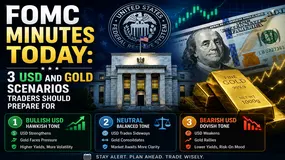
The Fed releases the July FOMC minutes on 19 August 2026. Here are three USD and gold scenarios, confirmation signals, and a practical risk checklist for traders.

A Prime of Prime forex arrangement can help a broker access trading relationships, credit intermediation, technology connectivity, and liquidity aggregation that may otherwise be difficult to obtain directly. But the label does not prove direct bank access, executable depth, or a particular execution outcome. This 2026 guide explains what a forex Prime of Prime, PoP liquidity provider, prime brokerage forex service, and forex prime broker proposal can mean in practice; where the credit and order-routing chain must be documented; how to test pricing, limits, rejects, records, and resilience; and which commercial terms create hidden operating cost. Use the comparison framework, red-flag list, and 90-day launch plan to assess fit for your client mix and risk model. The objective is a controllable execution dependency with traceable evidence, not a marketing claim about institutional access.
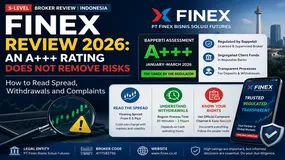
FINEX review 2026 for readers comparing an Indonesia forex broker: understand what Bappebti's A+++ rating does and does not show, then check floating spreads, withdrawals, segregated accounts and the complaint route for PT Finex Bisnis Solusi Futures.

Choosing a forex liquidity provider is not a search for the lowest displayed spread or the longest provider list. It is a broker decision about pricing integrity, depth, routing, credit, reporting, incident response, and client communication. This 2026 guide explains how a forex LP, FX liquidity provider, or liquidity provider forex arrangement fits into a broker’s execution chain; what to test before onboarding; why a “best forex liquidity provider” claim cannot replace due diligence; and how to compare cost beyond commission. Use the execution-quality scorecard, provider questions, routing scenarios, and 90-day onboarding plan to assess whether a liquidity relationship can support your actual client mix, instruments, risk model, and jurisdiction. The goal is not to make a universal ranking. It is to build evidence that your broker can explain, supervise, reconcile, and recover its execution service when market conditions are difficult.
WikiFXWikiFXWikiFXWikiFXWikiFXWikiFXWikiFXWikiFXWikiFXWikiFX