


FOMC Minutes Today: 3 USD and Gold Scenarios Traders Should Prepare For
The Fed releases the July FOMC minutes on 19 August 2026. Here are three USD and gold scenarios, confirmation signals, and a practical risk checklist for traders.
Original

简体中文
繁體中文
English
Pусский
日本語
ภาษาไทย
Tiếng Việt
Bahasa Indonesia
Español
हिन्दी
Filippiiniläinen
Français
Deutsch
Português
Türkçe
한국어
العربية
اردو




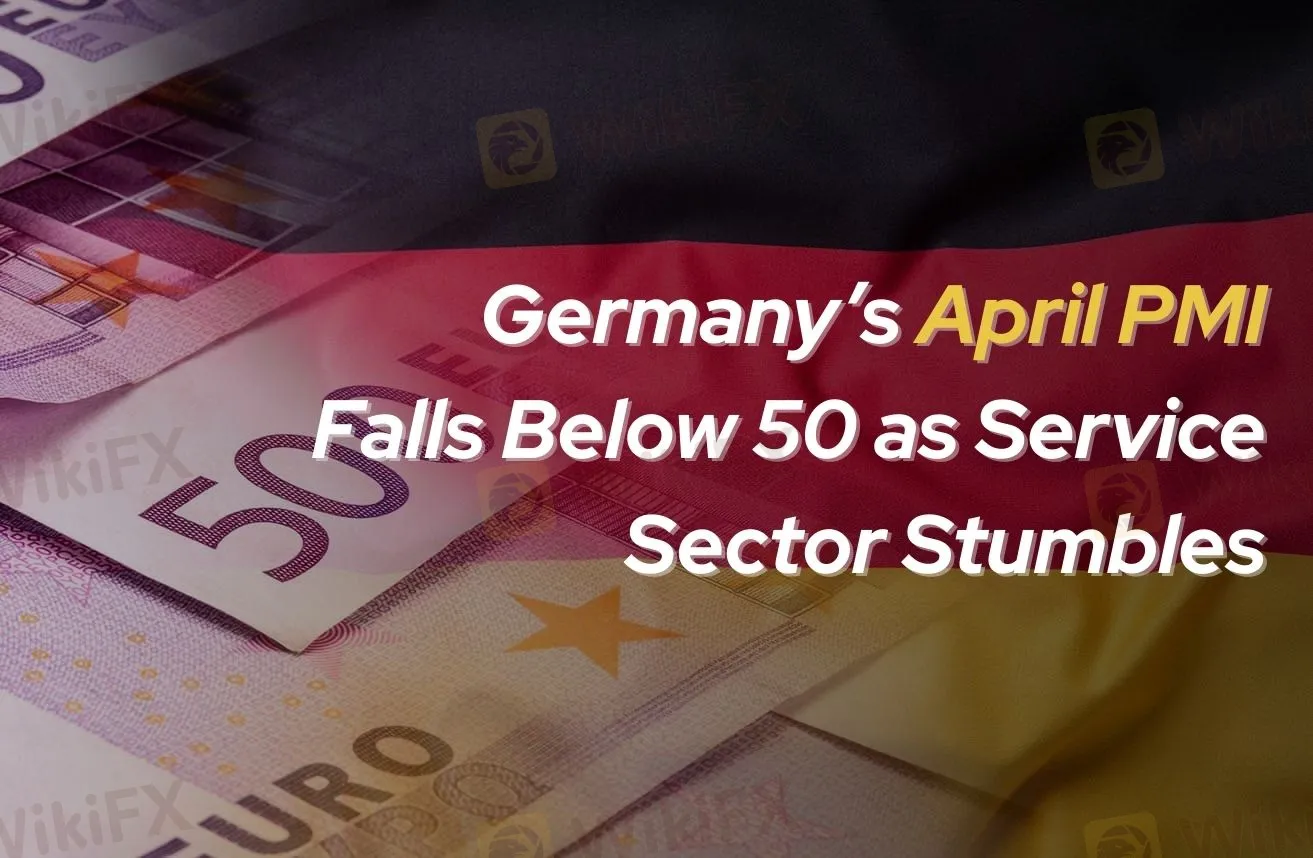
Abstract:Germany’s composite PMI fell to 49.7 in April, signaling a contraction in private sector activity for the first time in four months. The decline was driven by a steep drop in services, while manufacturing showed modest improvement.
 Contents
Germany‘s composite Purchasing Managers’ Index (PMI), a key gauge of economic health across the manufacturing and services sectors, slipped to 49.7 in April, down from 51.3 in March. This drop, although moderate, marked a return to contraction territory for the first time in four months, signaling that the momentum seen earlier in 2024 has lost steam.
The downturn was largely driven by weakness in the services sector, which had been the key driver of growth since late 2023. Aprils services PMI dropped to 48.8—its lowest point in 14 months—indicating a sharp pullback in activity. Survey responses suggest that elevated uncertainty surrounding trade policy and geopolitical developments has weighed on business confidence and consumer demand, particularly in business-to-business services and hospitality.
In contrast, manufacturing activity showed relative resilience. The manufacturing PMI stood at 48.0, a marginal decline from Marchs 48.3, but still suggesting a soft contraction. Notably, factory output continued to grow modestly for the second consecutive month, supported by a small uptick in new export orders.
One of the key themes across responses from service providers was anxiety over the potential impact of new trade tariffs—particularly from the United States. While these tariffs have not yet materialized into major disruptions for German manufacturing, the uncertainty surrounding them has caused hesitation in corporate investment and hiring decisions.
Business expectations fell to their lowest level in six months, with many service firms reporting the sharpest drop in sentiment since September 2023. Firms also cited delays in decision-making processes among clients and consumers, contributing to fewer new orders. The survey revealed that this nervousness is translating into tangible economic effects: private sector backlogs declined in April, suggesting a lack of capacity pressure and reduced forward demand.
Despite the services sector shedding confidence, employment patterns remained mixed. While factories reduced headcounts for the eleventh month in a row, service firms continued to add staff, albeit at a slower rate. This divergence reflects broader uncertainty, with companies hesitating to fully scale back but equally cautious about committing to long-term expansion.
The PMI data also brought insights into inflationary pressures. Average output prices for goods and services edged up in April, primarily due to rising factory gate prices—which increased for the first time in nearly two years. Meanwhile, price inflation in the services sector softened, showing the weakest growth since October 2023. Overall input costs, which include raw materials and labor, eased to a five-month low, hinting at a broader cooling of inflationary momentum.
A more encouraging development came from export data. For the first time in over three years, German manufacturers reported a rise in export sales, a potential lifeline for an economy heavily reliant on global trade. According to Hamburg Commercial Bank‘s Chief Economist Cyrus de la Rubia, much of Germany’s export strength lies in markets beyond the US—accounting for roughly 90% of outbound trade. This diversification may offer some insulation from potential US tariff actions and supports cautious optimism in the months ahead.
Germanys April PMI offers a sobering snapshot of a complex recovery: services weakened, confidence dipped, but exports and factory resilience offer tentative support. For now, caution remains the prevailing mood across German boardrooms.
Disclaimer:
The views in this article only represent the author's personal views, and do not constitute investment advice on this platform. This platform does not guarantee the accuracy, completeness and timeliness of the information in the article, and will not be liable for any loss caused by the use of or reliance on the information in the article.
The Fed releases the July FOMC minutes on 19 August 2026. Here are three USD and gold scenarios, confirmation signals, and a practical risk checklist for traders.
India's rupee is expected to open near 95.14-95.16 per US dollar after closing at 95.2075 on Friday, while Brent crude was quoted at $84.50 and RBI market presence supported the currency. This report separates a reported market intervention from a fixed exchange-rate target, explains why oil, US employment data and Federal Reserve expectations matter, and gives a practical risk checklist for forex trading India. It also explains why volatility is not a reason to trust unverified online forex trading platforms.
The Reserve Bank of India has appointed Monisha Chakraborty as Executive Director with effect from 3 August 2026; she will oversee the Foreign Exchange Department and the Financial Markets Regulation Department. Chakraborty is a career central banker with over three decades of experience in Supervision, Foreign Exchange, and Government and Bank Accounts, and previously served as Banking Ombudsman. This report explains the significance of the new RBI Executive Director appointment for forex regulation India, the scope of the Foreign Exchange Department and the Financial Markets Regulation Department, and what authorised persons, banks, and forex market participants should monitor as the new ED takes charge.
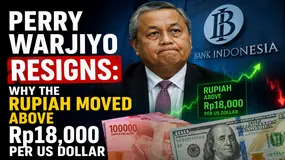
Perry Warjiyo resigned as Bank Indonesia governor, Destry Damayanti became acting governor, and the rupiah traded above Rp18,000. Here is what forex traders should monitor next.
WikiFXWikiFXWikiFXWikiFXWikiFXWikiFXWikiFXWikiFXWikiFXWikiFX