


FOMC Minutes Today: 3 USD and Gold Scenarios Traders Should Prepare For
The Fed releases the July FOMC minutes on 19 August 2026. Here are three USD and gold scenarios, confirmation signals, and a practical risk checklist for traders.
Original

简体中文
繁體中文
English
Pусский
日本語
ภาษาไทย
Tiếng Việt
Bahasa Indonesia
Español
हिन्दी
Filippiiniläinen
Français
Deutsch
Português
Türkçe
한국어
العربية
اردو




Abstract:Nigerian companies are actively embracing artificial intelligence (AI) as a strategic tool for transformation, aiming to position it as a core pillar of the country’s future economic strength.
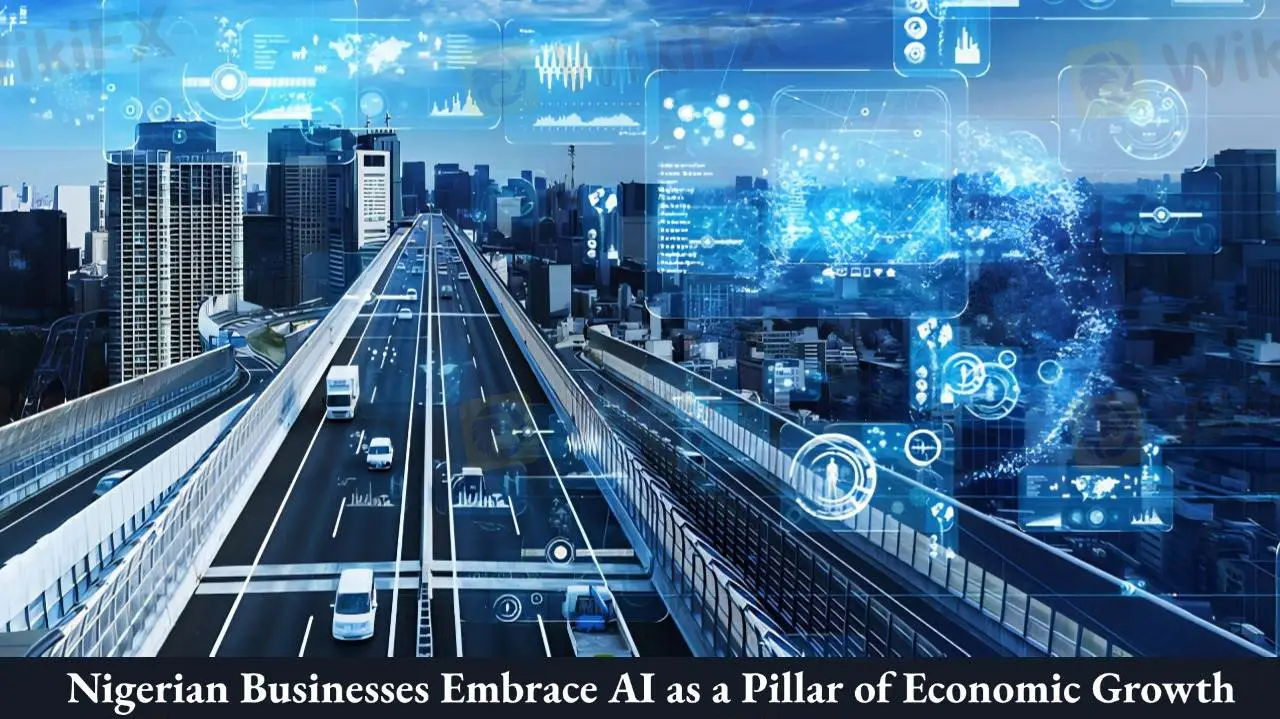
In the face of persistent global economic headwinds—including inflation, currency volatility, and high interest rates—Nigerian business leaders are responding not with caution, but with innovation and confidence. A recent global CEO survey highlights this shift in mindset: 61% of Nigerian CEOs anticipate economic growth in the next 12 months, slightly above the global average. Even more striking is their collective readiness to overhaul traditional business strategies and embrace emerging technologies, with artificial intelligence standing out as the key focus.
Rather than being intimidated by economic uncertainty, many Nigerian firms are doubling down on internal reforms and long-term planning. Over 80% of surveyed CEOs in the country expect to incorporate AI into their operations within three years—surpassing expectations in many developed economies. For these companies, AI is not merely a technical upgrade; it's a game-changer that can reshape entire industries. From predictive analytics in logistics to automated financial reporting and intelligent customer service systems, AI offers the promise of both improved efficiency and new revenue streams.
This technological shift is also accompanied by a broader strategic realignment. Many Nigerian businesses have entered new sectors and adopted more flexible pricing models to meet evolving consumer expectations. More than half of the CEOs surveyed report having expanded their customer base in recent years. This adaptability reflects a maturing corporate environment where innovation is being treated as a necessity rather than a luxury.
The anticipated impact of AI on Nigeria‘s economy is multifaceted. On one hand, it can help mitigate operational challenges—such as labor shortages and rising costs—by automating repetitive tasks and enabling smarter decision-making. On the other hand, AI can be leveraged to create entirely new value propositions, particularly in finance, healthcare, and agriculture—sectors critical to Nigeria’s long-term development. For instance, AI-driven tools can help banks identify fraud patterns faster, aid hospitals in diagnostic processes, or help farmers optimize crop yields through data modeling.
However, the road ahead is not without challenges. One of the most significant is the lack of skilled labor. While AI adoption is high on the agenda, many companies face difficulty sourcing professionals with the technical expertise to manage and scale these systems. Without substantial investment in talent development—whether through partnerships with universities, upskilling programs, or global collaborations—the promise of AI could stall before reaching its potential.
Another hurdle is cost. Developing and integrating AI tools can be expensive, and the return on investment may not be immediate. For companies operating on tight margins, this can pose a dilemma: how to invest in transformation while maintaining financial stability. Furthermore, successful AI adoption often requires complementary investments in infrastructure, such as cloud computing capabilities and cybersecurity frameworks.
From an investor‘s standpoint, Nigeria’s AI momentum offers fresh opportunities—but also demands caution. While the enthusiasm from CEOs is encouraging, investors must evaluate each company‘s capacity for sustainable innovation. It’s not enough for a business to declare its digital ambitions; it must also demonstrate the governance, adaptability, and operational discipline needed to execute them effectively.
Meanwhile, Nigerian businesses are showing increased awareness of environmental and social responsibility. A significant number of CEOs reported making climate-friendly investments in the past five years. While only a small percentage currently see climate change as a major risk to their operations, this awareness is growing. Integrating AI and sustainable practices could become a powerful dual strategy, helping companies improve both their bottom line and their social impact.
In conclusion, Nigeria is at a pivotal moment where optimism, innovation, and necessity are converging. AI is not a distant vision but a present-day priority, seen as essential for long-term competitiveness. For businesses, this means balancing bold transformation with careful execution. For investors, it presents a new frontier filled with both opportunity and complexity. And for the broader economy, it signals a shift toward a more technologically resilient future—one built not just on resources or consumption, but on intelligence, adaptability, and long-term strategic thinking.

Disclaimer:
The views in this article only represent the author's personal views, and do not constitute investment advice on this platform. This platform does not guarantee the accuracy, completeness and timeliness of the information in the article, and will not be liable for any loss caused by the use of or reliance on the information in the article.

The Fed releases the July FOMC minutes on 19 August 2026. Here are three USD and gold scenarios, confirmation signals, and a practical risk checklist for traders.

A Prime of Prime forex arrangement can help a broker access trading relationships, credit intermediation, technology connectivity, and liquidity aggregation that may otherwise be difficult to obtain directly. But the label does not prove direct bank access, executable depth, or a particular execution outcome. This 2026 guide explains what a forex Prime of Prime, PoP liquidity provider, prime brokerage forex service, and forex prime broker proposal can mean in practice; where the credit and order-routing chain must be documented; how to test pricing, limits, rejects, records, and resilience; and which commercial terms create hidden operating cost. Use the comparison framework, red-flag list, and 90-day launch plan to assess fit for your client mix and risk model. The objective is a controllable execution dependency with traceable evidence, not a marketing claim about institutional access.
FINEX review 2026 for readers comparing an Indonesia forex broker: understand what Bappebti's A+++ rating does and does not show, then check floating spreads, withdrawals, segregated accounts and the complaint route for PT Finex Bisnis Solusi Futures.

Choosing a forex liquidity provider is not a search for the lowest displayed spread or the longest provider list. It is a broker decision about pricing integrity, depth, routing, credit, reporting, incident response, and client communication. This 2026 guide explains how a forex LP, FX liquidity provider, or liquidity provider forex arrangement fits into a broker’s execution chain; what to test before onboarding; why a “best forex liquidity provider” claim cannot replace due diligence; and how to compare cost beyond commission. Use the execution-quality scorecard, provider questions, routing scenarios, and 90-day onboarding plan to assess whether a liquidity relationship can support your actual client mix, instruments, risk model, and jurisdiction. The goal is not to make a universal ranking. It is to build evidence that your broker can explain, supervise, reconcile, and recover its execution service when market conditions are difficult.
WikiFXWikiFXWikiFXWikiFXWikiFXWikiFXWikiFXWikiFXWikiFXWikiFX