


FOMC Minutes Today: 3 USD and Gold Scenarios Traders Should Prepare For
The Fed releases the July FOMC minutes on 19 August 2026. Here are three USD and gold scenarios, confirmation signals, and a practical risk checklist for traders.
Original

简体中文
繁體中文
English
Pусский
日本語
ภาษาไทย
Tiếng Việt
Bahasa Indonesia
Español
हिन्दी
Filippiiniläinen
Français
Deutsch
Português
Türkçe
한국어
العربية
اردو




Abstract:The U.S. bond market initially rallied on cooling inflation but lost steam as Wall Street bet on later rate cuts. Fed policy expectations now lean toward a December easing, dampening gold and boosting equities.
Recent movements in U.S. financial markets reflect growing uncertainty about the timing of Federal Reserve interest rate cuts, despite signs of easing inflation. While Aprils consumer price data offered some reassurance, investor attention has quickly turned to broader macroeconomic factors and their impact on monetary policy.
 Contents
Following the release of Aprils CPI, which came in below expectations, U.S. Treasury yields initially fell. The two-year yield dropped to 3.95% before rebounding to 4.02%, reflecting market hesitation. At the same time, equity markets rallied strongly, buoyed by optimism over improved global trade sentiment and a more stable inflation outlook.
However, the rally in risk assets led some investors to reduce their bond exposure, reversing earlier gains in Treasuries. Traders are weighing short-term optimism against the reality that any potential rate cuts may still be several months away. Current pricing in derivatives markets suggests two 25-basis-point cuts may occur before the end of 2025, though most forecasts now lean toward December.
Several major financial institutions have recently updated their predictions for Federal Reserve policy. Goldman Sachs, JPMorgan Chase, Barclays, and Citigroup have all shifted their expected timing for the next rate cut from mid-2025 to the final quarter of the year. These changes reflect a more cautious approach, factoring in stronger-than-expected employment data and signs of improving growth projections.
At the same time, longer-term bond yields have risen, with 10- and 30-year maturities seeing notable increases. In the options market, positioning has also started to reflect expectations for higher yields over time, signaling that many investors do not yet anticipate an aggressive easing cycle.
While the softer April CPI print eased immediate fears, analysts caution that inflationary risks still exist. Inventory overhangs in some sectors may be keeping prices temporarily low, but future supply chain or demand shocks could revive upward pressure on costs. Traders will closely watch upcoming inflation and labor market data, including PCE readings and employment reports, for further direction.
Some observers believe inflation could trend higher again in 2026 if fiscal stimulus efforts pick up. However, the current moderation in price growth, coupled with stable consumer spending, has helped ease immediate pressure on the Fed to act quickly.
The recent improvement in financial conditions has fueled renewed interest in corporate bonds and other higher-yielding instruments. Issuance of investment-grade debt has increased, signaling greater investor willingness to take on risk. Meanwhile, the U.S. dollar index weakened slightly, adding to support for equities and commodities.
This shifting environment has also influenced sentiment in alternative assets. With lower rates potentially on the horizon later in the year, some market participants anticipate that assets like gold and cryptocurrencies may benefit from renewed capital inflows, particularly if liquidity conditions ease.
Investors now face a complex landscape where inflation is slowing but not fully under control, and where policy decisions may hinge on data trends over the next several months. Market volatility may persist as traders assess incoming economic reports and adjust their expectations for interest rates accordingly.
While hopes for immediate rate cuts have faded, the broader narrative remains: monetary policy may turn more accommodative—just not yet. Until then, the path forward for bonds, equities, and digital assets will remain highly sensitive to evolving data and market sentiment.
Disclaimer:
The views in this article only represent the author's personal views, and do not constitute investment advice on this platform. This platform does not guarantee the accuracy, completeness and timeliness of the information in the article, and will not be liable for any loss caused by the use of or reliance on the information in the article.
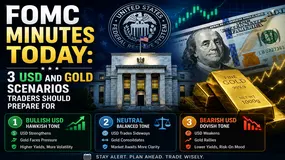
The Fed releases the July FOMC minutes on 19 August 2026. Here are three USD and gold scenarios, confirmation signals, and a practical risk checklist for traders.
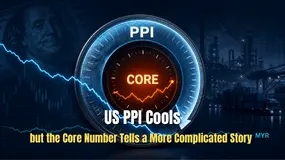
US wholesale inflation slowed sharply in July, encouraging investors to reduce their bets on another Federal Reserve rate hike. Dig beneath the headline, however, and persistent core price pressures suggest the inflation battle is not over.
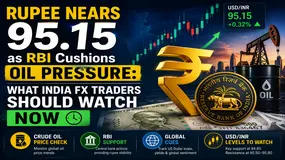
India's rupee is expected to open near 95.14-95.16 per US dollar after closing at 95.2075 on Friday, while Brent crude was quoted at $84.50 and RBI market presence supported the currency. This report separates a reported market intervention from a fixed exchange-rate target, explains why oil, US employment data and Federal Reserve expectations matter, and gives a practical risk checklist for forex trading India. It also explains why volatility is not a reason to trust unverified online forex trading platforms.
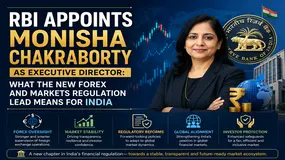
The Reserve Bank of India has appointed Monisha Chakraborty as Executive Director with effect from 3 August 2026; she will oversee the Foreign Exchange Department and the Financial Markets Regulation Department. Chakraborty is a career central banker with over three decades of experience in Supervision, Foreign Exchange, and Government and Bank Accounts, and previously served as Banking Ombudsman. This report explains the significance of the new RBI Executive Director appointment for forex regulation India, the scope of the Foreign Exchange Department and the Financial Markets Regulation Department, and what authorised persons, banks, and forex market participants should monitor as the new ED takes charge.
WikiFXWikiFXWikiFXWikiFXWikiFXWikiFXWikiFXWikiFXWikiFXWikiFX