


FOMC Minutes Today: 3 USD and Gold Scenarios Traders Should Prepare For
The Fed releases the July FOMC minutes on 19 August 2026. Here are three USD and gold scenarios, confirmation signals, and a practical risk checklist for traders.
Original

简体中文
繁體中文
English
Pусский
日本語
ภาษาไทย
Tiếng Việt
Bahasa Indonesia
Español
हिन्दी
Filippiiniläinen
Français
Deutsch
Português
Türkçe
한국어
العربية
اردو




Abstract:As 2025 approaches, the global cryptocurrency market enters a phase filled with uncertainties and challenges.

Despite recent significant declines in Bitcoin‘s price, FBS analysts believe that, although under pressure, the market may be undergoing an important correction and is likely to experience a rebound in the future. This article explores FBS analysts’ predictions for 2025, examining the potential and challenges the market may face in the near future.
FBS (FBS Markets Inc.) is one of the leading global brokers, founded in 2009, dedicated to providing diversified financial products and services to global investors. As an online Forex and CFD trading platform, FBS enjoys a strong reputation in the global market. With advanced technology and a rigorous risk management system, FBS not only offers traditional Forex trading services but also covers various asset classes including commodities, stocks, and cryptocurrencies. Through continuous innovation and optimization of user experience, FBS has become one of the preferred trading platforms for investors worldwide.
According to FBS's latest 2025 market analysis report, analysts believe that the current downturn in the cryptocurrency market is part of a broader correction phase. Despite a 28% decline in Bitcoin’s price since the start of the year, FBS experts predict that this price pullback is not the end of the market but rather a necessary step towards a healthier market development.
FBS analysts note that similar market fluctuations have occurred in past bull markets. For example, Bitcoin experienced a significant price drop in 2018, followed by a strong recovery driven by monetary easing policies. For 2025, FBS analysts forecast that, as liquidity conditions improve and market sentiment recovers, Bitcoins price is likely to recover and even rise further. They predict that Bitcoin will challenge the key level of $100,000 in the mid-term, and if market conditions continue to improve, the price could even reach $150,000.
Additionally, FBS is optimistic about the potential of the altcoin market. Although currently in a consolidation phase, the market capitalization of altcoins may recover from $810 billion back to its previous high of $1.62 trillion as investor confidence returns.
Despite the optimism expressed by FBS analysts for 2025, the market still faces numerous challenges. First and foremost, the uncertainty surrounding the global economic landscape remains a significant factor. As the cryptocurrency market becomes more interconnected with traditional financial markets, any economic fluctuations or financial crises could trigger volatile movements. In particular, macroeconomic factors such as interest rate changes and inflation may exacerbate market instability.
Moreover, geopolitical risks continue to pose a challenge to the market. Although the decentralized nature of cryptocurrencies reduces their dependency on traditional financial systems, global political conflicts and trade tensions can still have a negative impact on market sentiment. Investor confidence may be shaken by political factors, leading to dramatic price fluctuations.
For investors, the 2025 cryptocurrency market will be full of uncertainties and risks. Firstly, the markets volatility remains high, requiring investors to have a higher tolerance for risk. Between price increases and decreases, investors may face emotional swings and decision-making challenges. Determining the right market timing and avoiding following the crowd will be critical for every investor.
In addition, as the market matures, regulatory changes will also become a focal point for investors. Different countries have varying regulations concerning cryptocurrencies, and the uncertainty surrounding these policies could pose risks for investors. Before entering the market, investors will need to be well-informed and compliant with local laws and regulations to ensure their investments are legally sound.
Bitcoin is a digital currency based on blockchain technology, proposed by an individual or group named Satoshi Nakamoto in 2008 and officially released in 2009. Bitcoins most distinctive feature is its decentralization, meaning it is not controlled by any government or financial institution. All transactions are verified and recorded through the blockchain network.
Bitcoin was created to offer a payment method that is independent of traditional banking systems, and it has features such as anonymity, cross-border payments, and immutability. As a digital asset, Bitcoin has a fixed total supply of 21 million coins. Over time, the circulating supply of Bitcoin will gradually decrease, which increases its scarcity.
FBS analysts predictions for the 2025 cryptocurrency market indicate that, despite a short-term correction, cryptocurrencies—especially Bitcoin—still have strong growth potential in the coming years. However, uncertainties in the market remain, and investors need to remain rational, keeping a close watch on market trends while managing risks. As the market develops and matures, more opportunities and challenges will arise for investors.
For more information on brokers, feel free to visit our official website (https://www.WikiFX.com/en) or download the WikiFX App to help you find the most trustworthy broker and ensure your trading experience is safer and more reliable.

Disclaimer:
The views in this article only represent the author's personal views, and do not constitute investment advice on this platform. This platform does not guarantee the accuracy, completeness and timeliness of the information in the article, and will not be liable for any loss caused by the use of or reliance on the information in the article.
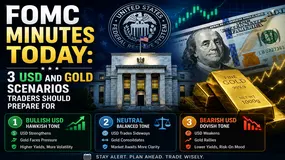
The Fed releases the July FOMC minutes on 19 August 2026. Here are three USD and gold scenarios, confirmation signals, and a practical risk checklist for traders.

A Prime of Prime forex arrangement can help a broker access trading relationships, credit intermediation, technology connectivity, and liquidity aggregation that may otherwise be difficult to obtain directly. But the label does not prove direct bank access, executable depth, or a particular execution outcome. This 2026 guide explains what a forex Prime of Prime, PoP liquidity provider, prime brokerage forex service, and forex prime broker proposal can mean in practice; where the credit and order-routing chain must be documented; how to test pricing, limits, rejects, records, and resilience; and which commercial terms create hidden operating cost. Use the comparison framework, red-flag list, and 90-day launch plan to assess fit for your client mix and risk model. The objective is a controllable execution dependency with traceable evidence, not a marketing claim about institutional access.
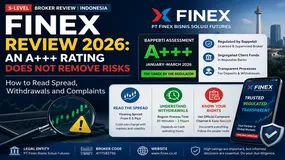
FINEX review 2026 for readers comparing an Indonesia forex broker: understand what Bappebti's A+++ rating does and does not show, then check floating spreads, withdrawals, segregated accounts and the complaint route for PT Finex Bisnis Solusi Futures.

Choosing a forex liquidity provider is not a search for the lowest displayed spread or the longest provider list. It is a broker decision about pricing integrity, depth, routing, credit, reporting, incident response, and client communication. This 2026 guide explains how a forex LP, FX liquidity provider, or liquidity provider forex arrangement fits into a broker’s execution chain; what to test before onboarding; why a “best forex liquidity provider” claim cannot replace due diligence; and how to compare cost beyond commission. Use the execution-quality scorecard, provider questions, routing scenarios, and 90-day onboarding plan to assess whether a liquidity relationship can support your actual client mix, instruments, risk model, and jurisdiction. The goal is not to make a universal ranking. It is to build evidence that your broker can explain, supervise, reconcile, and recover its execution service when market conditions are difficult.
WikiFXWikiFXWikiFXWikiFXWikiFXWikiFXWikiFXWikiFXWikiFXWikiFX