


FOMC Minutes Today: 3 USD and Gold Scenarios Traders Should Prepare For
The Fed releases the July FOMC minutes on 19 August 2026. Here are three USD and gold scenarios, confirmation signals, and a practical risk checklist for traders.
Original

简体中文
繁體中文
English
Pусский
日本語
ภาษาไทย
Tiếng Việt
Bahasa Indonesia
Español
हिन्दी
Filippiiniläinen
Français
Deutsch
Português
Türkçe
한국어
العربية
اردو




Abstract:No policy change, but shifting signals — will the Fed meeting steer the dollar’s next move?
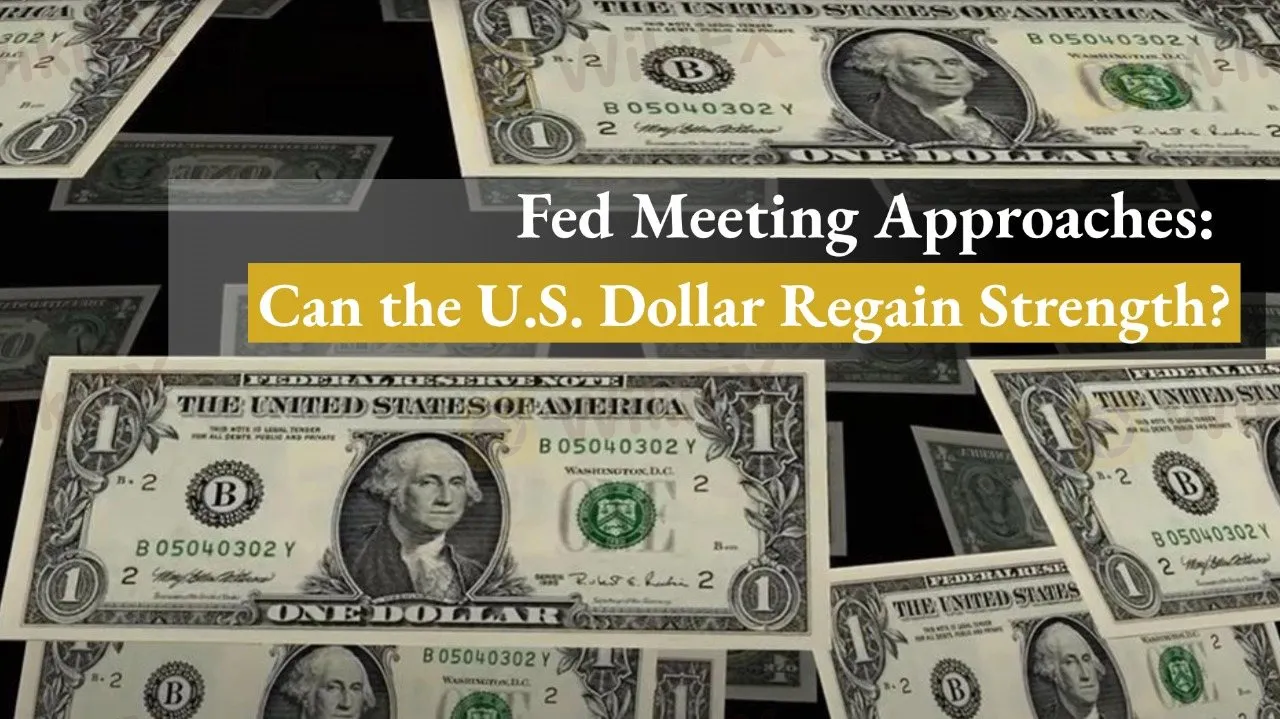
The Federal Reserve is set to hold its FOMC meeting this Wednesday. While markets widely expect interest rates to remain unchanged, the meetings tone and projections could significantly impact global financial markets. The U.S. dollar has been trading in a choppy range lately, with mixed economic and inflation data adding to uncertainty. As the meeting nears, investors are watching closely to see whether the dollar will find momentum for a renewed rebound.
In recent days, the U.S. dollar index has shown slight gains, hovering around 105, largely supported by safe-haven demand amid rising geopolitical tensions. Meanwhile, the latest U.S. economic data has been mixed. Mays CPI rose 0.2% month-on-month, while core CPI slowed to 3.4% year-on-year—indicating modest disinflation, but likely not enough to trigger an immediate policy shift.
The labor market is also sending softer signals, with jobless claims rising and concerns about weakening economic momentum growing. This blend of mildly dovish data has kept the dollar trading sideways to slightly higher. While short-term support remains due to global risk aversion, longer-term dollar strength still depends on a clear shift in Fed policy expectations.
Markets broadly agree that the Fed will keep its benchmark rate steady at 5.25%-5.50%, marking the seventh straight hold. However, the real market driver lies in the updated dot plot and economic forecasts released at the meeting.
If the new dot plot suggests that officials see only one or even no rate cuts this year, investors may need to reassess their expectations for a September cut—potentially boosting the dollar. Conversely, if policymakers lean toward earlier easing, the dollar may lose ground again.
Fed Chair Jerome Powells press conference will be another key moment. Any shift in language—from cautious to open to easing—could spark immediate reactions in currency and bond markets.
U.S. Treasury yields have been volatile, reflecting uncertainty around the Feds next steps. Futures markets still price in up to two cuts this year, but sentiment is shifting, and the September outlook remains unclear.
The upcoming June 17 retail sales data could be a swing factor. Weak consumer spending could add pressure on the Fed to ease sooner, while strong numbers might support a higher-for-longer stance.
Geopolitical risks and global trade concerns also increase market sensitivity to Fed signals. With so many moving parts, the dollars path remains uncertain, and volatility is likely to persist.
In this climate of mixed signals and shifting expectations, investors face several challenges:
Harder to interpret data: Inflation appears to be easing, but employment and consumption figures send mixed messages, complicating efforts to anticipate Fed decisions.
More forward-looking markets: Markets often move ahead of official announcements, so any surprise from the Fed can lead to sharp, fast-moving price swings.
Asset allocation complexity: While a stronger dollar seems possible, its durability depends on clear policy confirmation. Relationships between equities, gold, and bonds now hinge more than ever on accurate Fed projections.
As the central bank behind the worlds reserve currency, the Fed influences everything from global trade to capital flows. Its policy decisions affect not only the dollar but also bond yields, emerging markets, and commodity prices worldwide.
The dot plot shows each Fed officials projection for interest rates over the next few years. It's a key tool for understanding the central bank's internal consensus. A hawkish dot plot can lift the dollar; a dovish one can trigger sell-offs.
The Fed has a dual mandate: price stability and maximum employment. When inflation is high, it tends to prioritize price control—even if the labor market shows weakness. Conversely, in a labor crisis, the Fed might ease even before inflation is fully under control.
The Fed uses speeches and statements to guide market expectations, reducing the need for abrupt policy shifts. This is why even subtle language changes during press conferences can move markets dramatically.
Although rates will likely remain unchanged, markets are at a sensitive turning point. With conflicting economic data and rising global risks, investors are looking for clear signals about future rate paths. The dot plot and Powells remarks could set the tone for months ahead.
While no rate change is expected this week, the Feds updated guidance could significantly alter market expectations. The dollar has been supported by safe-haven flows and easing inflation, but a decisive breakout requires confirmation from the Fed. For investors, this means a need for flexible strategies, close attention to data, and readiness to adjust positions based on how policy and economic signals evolve.

Disclaimer:
The views in this article only represent the author's personal views, and do not constitute investment advice on this platform. This platform does not guarantee the accuracy, completeness and timeliness of the information in the article, and will not be liable for any loss caused by the use of or reliance on the information in the article.
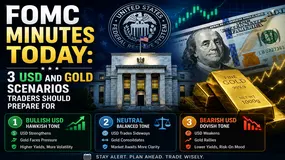
The Fed releases the July FOMC minutes on 19 August 2026. Here are three USD and gold scenarios, confirmation signals, and a practical risk checklist for traders.

A Prime of Prime forex arrangement can help a broker access trading relationships, credit intermediation, technology connectivity, and liquidity aggregation that may otherwise be difficult to obtain directly. But the label does not prove direct bank access, executable depth, or a particular execution outcome. This 2026 guide explains what a forex Prime of Prime, PoP liquidity provider, prime brokerage forex service, and forex prime broker proposal can mean in practice; where the credit and order-routing chain must be documented; how to test pricing, limits, rejects, records, and resilience; and which commercial terms create hidden operating cost. Use the comparison framework, red-flag list, and 90-day launch plan to assess fit for your client mix and risk model. The objective is a controllable execution dependency with traceable evidence, not a marketing claim about institutional access.
FINEX review 2026 for readers comparing an Indonesia forex broker: understand what Bappebti's A+++ rating does and does not show, then check floating spreads, withdrawals, segregated accounts and the complaint route for PT Finex Bisnis Solusi Futures.

Choosing a forex liquidity provider is not a search for the lowest displayed spread or the longest provider list. It is a broker decision about pricing integrity, depth, routing, credit, reporting, incident response, and client communication. This 2026 guide explains how a forex LP, FX liquidity provider, or liquidity provider forex arrangement fits into a broker’s execution chain; what to test before onboarding; why a “best forex liquidity provider” claim cannot replace due diligence; and how to compare cost beyond commission. Use the execution-quality scorecard, provider questions, routing scenarios, and 90-day onboarding plan to assess whether a liquidity relationship can support your actual client mix, instruments, risk model, and jurisdiction. The goal is not to make a universal ranking. It is to build evidence that your broker can explain, supervise, reconcile, and recover its execution service when market conditions are difficult.
WikiFXWikiFXWikiFXWikiFXWikiFXWikiFXWikiFXWikiFXWikiFXWikiFX