


FOMC Minutes Today: 3 USD and Gold Scenarios Traders Should Prepare For
The Fed releases the July FOMC minutes on 19 August 2026. Here are three USD and gold scenarios, confirmation signals, and a practical risk checklist for traders.
Original

简体中文
繁體中文
English
Pусский
日本語
ภาษาไทย
Tiếng Việt
Bahasa Indonesia
Español
हिन्दी
Filippiiniläinen
Français
Deutsch
Português
Türkçe
한국어
العربية
اردو




Abstract:The government’s plan to distribute ₦30 billion in annual pensions could mark a turning point in civil servant welfare, sparking widespread market interest.
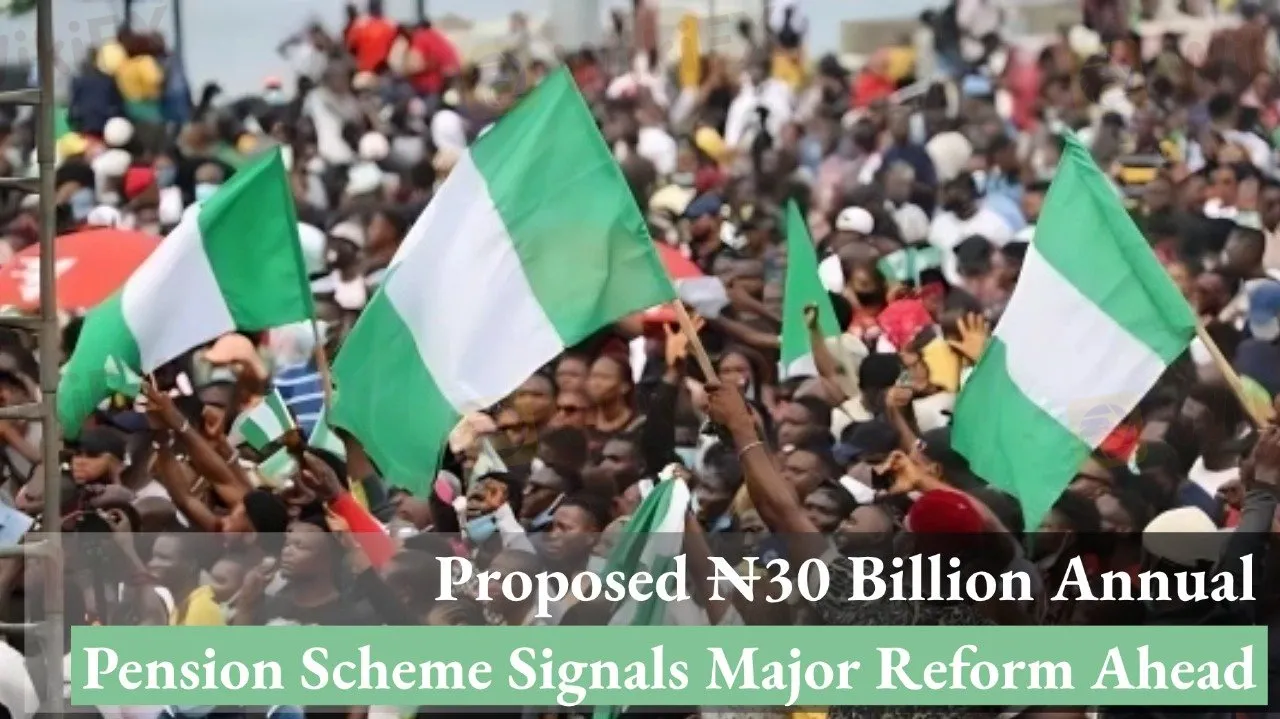
The Nigerian Federal Government is currently evaluating a new framework that would see an estimated ₦30 billion disbursed annually as pensions to retired employees from government-funded Ministries, Departments, and Agencies (MDAs). This initiative is the result of a joint effort between the National Pension Commission (PenCom) and the Office of the Head of Civil Service of the Federation (OHCSF), targeting retirees under the Contributory Pension Scheme (CPS).
The plan was officially revealed during a high-level meeting in Abuja on June 13, 2025. PenComs Director General, Omolola Oloworaran, introduced the proposed scheme during a visit to the Head of Civil Service, Didi Esther Walson-Jack.
Oloworaran explained that the initiative is grounded in Section 4(4)(a) of the 2014 Pension Reform Act (PRA). The ₦30 billion estimate is based on calculating 100% of the retirees‘ last annual salary—a figure verified by the 2024 Stakeholders’ Committee on Outstanding Pension Liabilities.
Beyond the annual budget allocation, the plan encompasses broader support mechanisms. These include settling legacy pension debts, launching a one-time digital enrollment campaign, and upgrading pension remittance systems—particularly for federal employees who worked before June 2004 but were not fully integrated into the CPS. Once verified, accrued pension benefits will be credited to individual Retirement Savings Accounts (RSAs), managed independently by Pension Fund Administrators (PFAs), ensuring long-term stability and insulating funds from political transitions.
To support enrollment, PenCom also intends to launch a digital application that simplifies registration and facilitates seamless data submission by various MDAs. For institutions not yet integrated with the Integrated Payroll and Personnel Information System (IPPIS), a new remittance model will be rolled out, relying on licensed Payment Solution Service Providers (PSSPs) to ensure accuracy and accountability.
Walson-Jack welcomed the proposal and pledged OHCSFs support, promising to issue circulars to ensure full cooperation from MDAs. She affirmed that the initiative aligns with long-standing expectations among civil servants and would help improve national human resource management.
While the proposal holds significant promise, it also introduces concerns regarding Nigerias fiscal sustainability. A consistent ₦30 billion annual outlay will place added pressure on public finances, raising questions about the government's ability to fund the program in the long term.
Delays in budget releases or economic slowdowns could disrupt pension disbursements, potentially weakening investor confidence in fiscal discipline and affecting the allocation to other key areas such as infrastructure and social services.
Moreover, if the pension fund yields remain low, the system may struggle to deliver real returns, jeopardizing the purchasing power of retirees and challenging the programs long-term viability.
For investors, the pension reform presents both opportunities and risks.
On the upside, sectors such as fintech, insurance, and fixed-income securities could benefit. As pension assets grow, investment in infrastructure and government securities may increase, stimulating market activity.
However, if the government resorts to additional borrowing to meet the ₦30 billion annual obligation, rising debt levels may lead to higher yields and potential currency depreciation. This scenario could tighten liquidity and introduce volatility across financial markets.
Investors must also monitor whether this reform shifts funding away from other economic development priorities. How the government balances pension disbursements with competing fiscal responsibilities will influence long-term macroeconomic stability.
Nigeria’s modern pension architecture was formalized with the 2004 Pension Reform Act, which introduced the Contributory Pension Scheme (CPS). This scheme mandates joint contributions by employers and employees, held in RSAs managed by licensed Pension Fund Administrators (PFAs).
The CPS covers most federal civil servants and many private-sector workers. Its strengths lie in transparency, individual account tracking, and market-based fund growth. However, it still faces multiple operational and structural challenges.
One major issue is the legacy debt from employees who began working before June 2004 but are not fully integrated into the CPS. Many such retirees lack clear records or have unpaid entitlements, resulting in delays or denial of benefits.
Data inconsistencies across MDAs further complicate pension management. Many institutions have not joined the IPPIS, making it difficult to reconcile contributions and manage disbursements effectively. Late remittances and inaccurate records persist as major issues.
Another challenge is the low return on pension investments. PFAs face limited diversification options due to the shallow domestic capital market and regulatory constraints. As inflation outpaces returns, real value erodes over time, putting retiree welfare at risk.
Technology gaps remain a barrier. While PenCom is pushing digital initiatives, the lack of a robust, unified system hinders efficient enrollment, fund tracking, and benefit disbursement.
To address these shortcomings, PenCom is introducing a unified remittance platform through PSSPs, launching a mobile registration app, improving data integration across agencies, and pushing for one-time legacy debt verification and settlement.
Nevertheless, pension reform is a gradual process. Effective implementation depends on sustained political commitment, inter-agency coordination, and adequate financial support. Public trust in the pension system will rely on its resilience, transparency, and ability to deliver consistent results.
The proposed ₦30 billion annual pension scheme represents a bold step toward modernizing Nigerias public service retirement framework. It responds to long-standing demands from retirees and offers a blueprint for future pension sustainability. Yet, its success will ultimately depend on how effectively the government can manage fiscal discipline, institutional coordination, and policy execution.

Disclaimer:
The views in this article only represent the author's personal views, and do not constitute investment advice on this platform. This platform does not guarantee the accuracy, completeness and timeliness of the information in the article, and will not be liable for any loss caused by the use of or reliance on the information in the article.

The Fed releases the July FOMC minutes on 19 August 2026. Here are three USD and gold scenarios, confirmation signals, and a practical risk checklist for traders.

A Prime of Prime forex arrangement can help a broker access trading relationships, credit intermediation, technology connectivity, and liquidity aggregation that may otherwise be difficult to obtain directly. But the label does not prove direct bank access, executable depth, or a particular execution outcome. This 2026 guide explains what a forex Prime of Prime, PoP liquidity provider, prime brokerage forex service, and forex prime broker proposal can mean in practice; where the credit and order-routing chain must be documented; how to test pricing, limits, rejects, records, and resilience; and which commercial terms create hidden operating cost. Use the comparison framework, red-flag list, and 90-day launch plan to assess fit for your client mix and risk model. The objective is a controllable execution dependency with traceable evidence, not a marketing claim about institutional access.
FINEX review 2026 for readers comparing an Indonesia forex broker: understand what Bappebti's A+++ rating does and does not show, then check floating spreads, withdrawals, segregated accounts and the complaint route for PT Finex Bisnis Solusi Futures.

Choosing a forex liquidity provider is not a search for the lowest displayed spread or the longest provider list. It is a broker decision about pricing integrity, depth, routing, credit, reporting, incident response, and client communication. This 2026 guide explains how a forex LP, FX liquidity provider, or liquidity provider forex arrangement fits into a broker’s execution chain; what to test before onboarding; why a “best forex liquidity provider” claim cannot replace due diligence; and how to compare cost beyond commission. Use the execution-quality scorecard, provider questions, routing scenarios, and 90-day onboarding plan to assess whether a liquidity relationship can support your actual client mix, instruments, risk model, and jurisdiction. The goal is not to make a universal ranking. It is to build evidence that your broker can explain, supervise, reconcile, and recover its execution service when market conditions are difficult.
WikiFXWikiFXWikiFXWikiFXWikiFXWikiFXWikiFXWikiFXWikiFXWikiFX