


FOMC Minutes Today: 3 USD and Gold Scenarios Traders Should Prepare For
The Fed releases the July FOMC minutes on 19 August 2026. Here are three USD and gold scenarios, confirmation signals, and a practical risk checklist for traders.
Original

简体中文
繁體中文
English
Pусский
日本語
ภาษาไทย
Tiếng Việt
Bahasa Indonesia
Español
हिन्दी
Filippiiniläinen
Français
Deutsch
Português
Türkçe
한국어
العربية
اردو




Abstract:The SEC settles with Ryan N. Cole, imposing a $234,000 fine and a five-year trading ban for spoofing in the options market, marking a crackdown on market manipulation.
The SEC has reached a settlement with trader Ryan N. Cole over an alleged options spoofing scheme that generated approximately $234,000 in illicit profits, with the deal requiring disgorgement, prejudgment interest, a civil penalty, and rare five-year SEC trading restrictions subject to court approval.
According to the SEC complaint, Cole allegedly used spoof orders in thinly traded options to manipulate the National Best Bid and Offer before executing multi-leg immediate-or-cancel orders at favorable prices influenced by his visible activity.
Cole consented, without admitting or denying the allegations, to a final judgment imposing permanent injunctive relief, $234,803 in disgorgement, $52,656 in prejudgment interest, and a $70,441 civil penalty, alongside the five-year prohibition on opening or trading in brokerage accounts without providing brokers copies of the complaint and judgment.
 Contents
Regulators allege Cole placed large visible day-limit spoof orders across neighboring options series to create an illusion of supply or demand, tightening wide bid-ask spreads in thin markets.
When spreads narrowed, he allegedly fired multi-leg IOC orders through the complex order book—often across venues—to capture fills at prices influenced by the spoofing, then canceled the decoy orders and repeated the tactic to exit positions.
The SEC also alleges he attempted to conceal the activity from his employers compliance staff, providing evasive responses before being terminated in February 2022.
While spoofing is explicitly prohibited in futures under the Dodd-Frank Acts anti-spoofing provision in the Commodity Exchange Act, the SEC brings securities spoofing cases under antifraud and anti-manipulation provisions, including Exchange Act Section 10(b), Rule 10b-5, Securities Act Section 17(a), and Exchange Act Section 9(a)(2).
The SEC‘s complaint charges Cole with violations of Section 17(a)(1) and (3), Section 10(b) and Rules 10b-5(a) and (c), and Section 9(a)(2), reflecting the agency’s securities-market approach to spoofing enforcement distinct from the Dodd-Frank Act spoofing ban in futures markets.
The case aligns with the SECs broader push to police options market manipulation, aided by cross-venue surveillance and data analytics that flag patterns such as high cancel-to-trade ratios and repeated IOC usage after visible order placement.
Under the proposed final judgment, Cole would be prohibited for five years from opening, maintaining, or trading in any brokerage account in his name, family members names, entities he controls, or third parties, without first providing the broker-dealer a copy of the SEC complaint and final judgment.
This condition underscores the SECs message that individual traders—not only institutions—face aggressive enforcement when their conduct manipulates market microstructure in the options market.
The settlement highlights the SECs continued focus on options market integrity and the evolving toolkit to detect spoofing-style options manipulation, even where the Dodd-Frank Act spoofing ban applies expressly to futures rather than securities markets.
For market participants, the case underscores that spoof orders described in an SEC complaint can trigger severe remedies, including injunctive relief, disgorgement, civil penalties, and multi-year trading restrictions—particularly where schemes exploit thin liquidity and complex order routing via IOC orders.
Stay tuned for the latest news from financial authorities and major regulatory bodies. Scan the QR code below to download and install the WikiFX App on your smartphone.

Disclaimer:
The views in this article only represent the author's personal views, and do not constitute investment advice on this platform. This platform does not guarantee the accuracy, completeness and timeliness of the information in the article, and will not be liable for any loss caused by the use of or reliance on the information in the article.
The Fed releases the July FOMC minutes on 19 August 2026. Here are three USD and gold scenarios, confirmation signals, and a practical risk checklist for traders.
Angel One, an India-based brokerage entity, constantly receives allegations from users online. Users are complaining about withheld funds, poor customer support service, undesired trade execution orders, etc. In this Angel One review, let’s quickly go through these complaints, understand its regulatory framework and pay attention to the product portfolio.
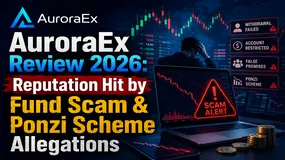
AuroraEx, a United States-based multi-asset brokerage entity, is facing serious user allegations over how it handles deposited funds. Many users have accused the broker of failing to meet its payment obligations. Some have questioned the broker over possible trade-related foul play, while others have alleged that it scammed them through a Ponzi operation. This AuroraEx review examines these user-reported allegations and provides an overview of the broker’s regulatory status.
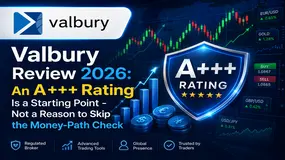
This Valbury review examines PT Valbury Asia Futures, Broker Code 3441997314, its Bappebti record, the Q1 2026 A+++ assessment, product-specific costs, segregated accounts, withdrawals and complaint routes for traders researching an Indonesia forex broker.
WikiFXWikiFXWikiFXWikiFXWikiFXWikiFXWikiFXWikiFXWikiFXWikiFX