


FOMC Minutes Today: 3 USD and Gold Scenarios Traders Should Prepare For
The Fed releases the July FOMC minutes on 19 August 2026. Here are three USD and gold scenarios, confirmation signals, and a practical risk checklist for traders.
Original

简体中文
繁體中文
English
Pусский
日本語
ภาษาไทย
Tiếng Việt
Bahasa Indonesia
Español
हिन्दी
Filippiiniläinen
Français
Deutsch
Português
Türkçe
한국어
العربية
اردو




Abstract:Finally, the day (August 27, 2025) arrived that India did not want. The imposition of 50% tariff by the US administration on most products exported from India. As per the US, the tariff is largely due to India continuing to purchase Russian oil. The extra 25% duty was added over 25% imposed at the beginning of August 2025 as India refused to stop purchasing Russian crude and defence hardware. Check out the sectors that will be hit the hardest with this tariff increase.
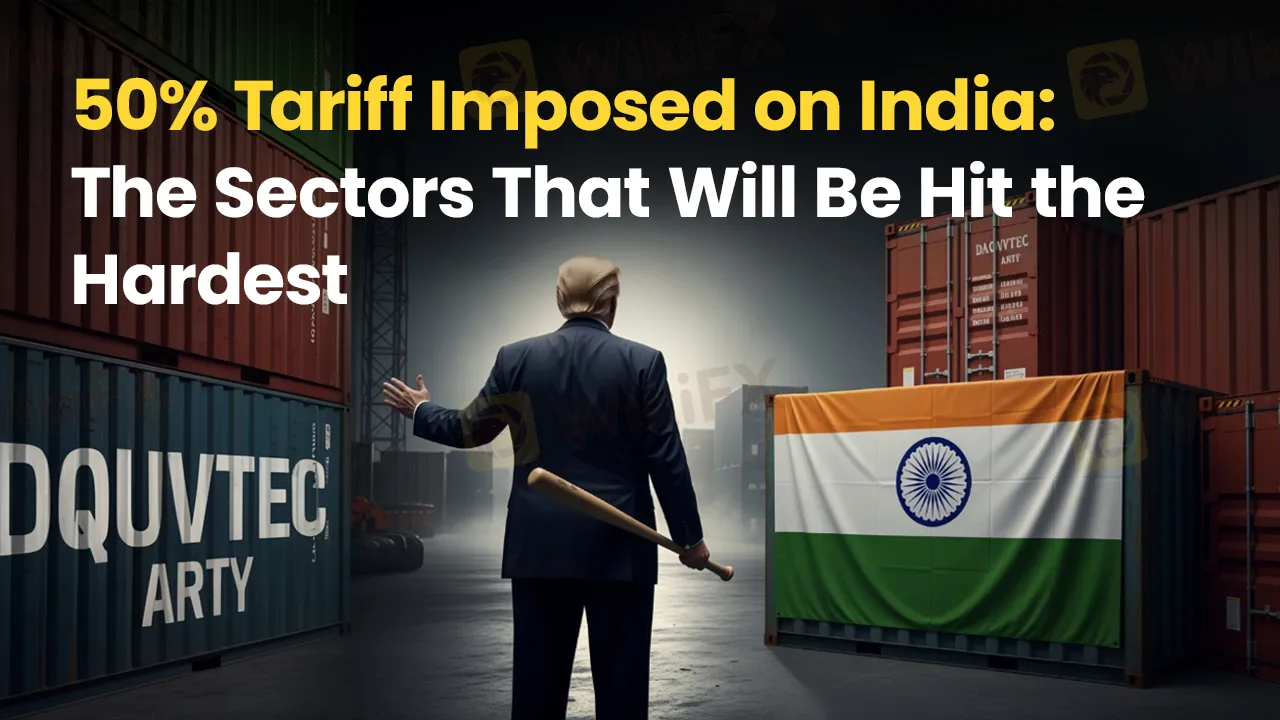
Finally, the day (August 27, 2025) arrived that India did not want. The imposition of 50% tariff by the US administration on most products exported from India. As per the US, the tariff is largely due to India continuing to purchase Russian oil. The extra 25% duty was added over 25% imposed at the beginning of August 2025 as India refused to stop purchasing Russian crude and defence hardware. Indian products are levied import tariffs, which are 16 points, 31 points and 35 points greater than those from China, most South-east Asian nations and South Korea, respectively.
The US remains the largest export market for India with annual shipments valued at around $86.5 billion. Two-thirds of the shipments will now come under the purview of a 50% tariff, potentially leading to job losses and production cuts across several sectors.
Experts express fear about Indian products losing competitiveness due to heavy import taxes levied by the US. It could easily wipe off one percentage point from the Indian Gross Domestic Product (GDP) growth this fiscal year. The jobless rate has already grown to 7.1% across cities in India. Job losses will likely mount in the anticipation of a massive drop in shipments to the US.
While electronics, petroleum products and generic pharmaceutical sectors are exempt from the tariffs, aluminium, copper and steel sectors will witness a 25% tariff. However, job-oriented sectors such as textiles, jewellery, leather and seafood are under the 50% tariff burden. Exports from these sectors could drop as high as 70%. In value terms, the drop could be from $60.2 billion to $18.6 billion. The overall shipments could see a decline of 43%, according to Ajay Srivastava, ex- Indian trade official and founder of the Global Trade Research Initiative.
Many companies shipped products to the US before the cutoff date, i.e., August 27, 2025. Now, as the tariff rates widened to 50%, exporters will either need to absorb costs or lose market share to countries such as Mexico, Bangladesh and Vietnam. Absorbing costs seems impossible for many US-focused export units in India.
The $179 Indian textile industry exports $37.7 with the US accounting for almost $10.3 billion. With the 50% tariff into effect, Indian textile products stand at a 30% cost disadvantage compared to Vietnam, Cambodia and Bangladesh.
Even if the US lowers the tariff rate later, competitors such as Vietnam, China, Turkey, Pakistan, Kenya, Mexico and Guatemala will likely have locked in market share, potentially dethroning India from one of the key markets.
India is the third-largest oil consumer globally and the leading buyer of Russian seaborne crude. Russia meets approximately 40% of the oil requirements in India. Despite the Russian crude discounts reducing to around $2.50 a barrel from $20-$25 below benchmark Brent crude in 2022, India continues to purchase oil from Russia to secure energy supply at lower costs. The sudden fall could make India susceptible to price swings globally.
Vinay Kumar, the Indian ambassador to Russia, commented that the country will continue purchasing oil from wherever it finds the best deal and adopt measures to counter the US tariffs. He further added that India was paying for Russian oil in rupees, sparing it from using its US currency reserves. The country has a trade settlement working system in national currencies. Indian firms have supposedly saved $17 billion by purchasing Russian oil since the war broke out in Ukraine.
Coming to an Important Forex Update - WikiFX Masterminds - Where Traders Learn Outstanding Strategies
Want to join this group? Follow these steps-
1. Scan the QR code placed right at the bottom.
2. Download the WikiFX Pro app.
3. Afterward, tap the ‘Scan’ icon placed at the top right corner
4. Scan the code again.
5. Congrats, you have become a community member.

Disclaimer:
The views in this article only represent the author's personal views, and do not constitute investment advice on this platform. This platform does not guarantee the accuracy, completeness and timeliness of the information in the article, and will not be liable for any loss caused by the use of or reliance on the information in the article.
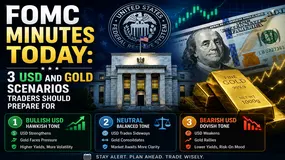
The Fed releases the July FOMC minutes on 19 August 2026. Here are three USD and gold scenarios, confirmation signals, and a practical risk checklist for traders.
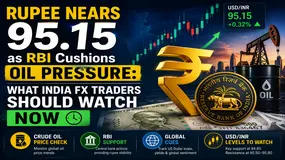
India's rupee is expected to open near 95.14-95.16 per US dollar after closing at 95.2075 on Friday, while Brent crude was quoted at $84.50 and RBI market presence supported the currency. This report separates a reported market intervention from a fixed exchange-rate target, explains why oil, US employment data and Federal Reserve expectations matter, and gives a practical risk checklist for forex trading India. It also explains why volatility is not a reason to trust unverified online forex trading platforms.
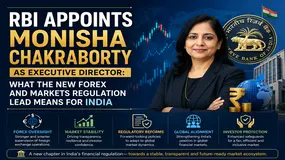
The Reserve Bank of India has appointed Monisha Chakraborty as Executive Director with effect from 3 August 2026; she will oversee the Foreign Exchange Department and the Financial Markets Regulation Department. Chakraborty is a career central banker with over three decades of experience in Supervision, Foreign Exchange, and Government and Bank Accounts, and previously served as Banking Ombudsman. This report explains the significance of the new RBI Executive Director appointment for forex regulation India, the scope of the Foreign Exchange Department and the Financial Markets Regulation Department, and what authorised persons, banks, and forex market participants should monitor as the new ED takes charge.
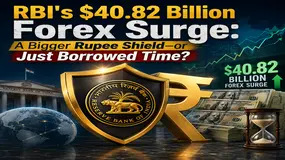
RBI's concessional forex swap facility had mobilised $40.82 billion by 31 July 2026, with FCNR(B) deposits providing $36.725 billion of the total. This India-focused analysis separates confirmed inflows from the $80–85 billion SBI Research projection, compares the 2026 programme with the 2013 FCNR(B) window, and explains what the numbers can—and cannot—do for the Indian rupee. It also shows how banks, NRI depositors, importers, exporters and institutional investors may be affected, while highlighting the oil, dollar, maturity and hedging risks that still matter for USD/INR and forex trading in India.
WikiFXWikiFXWikiFXWikiFXWikiFXWikiFXWikiFXWikiFXWikiFXWikiFX