


FOMC Minutes Today: 3 USD and Gold Scenarios Traders Should Prepare For
The Fed releases the July FOMC minutes on 19 August 2026. Here are three USD and gold scenarios, confirmation signals, and a practical risk checklist for traders.
Original

简体中文
繁體中文
English
Pусский
日本語
ภาษาไทย
Tiếng Việt
Bahasa Indonesia
Español
हिन्दी
Filippiiniläinen
Français
Deutsch
Português
Türkçe
한국어
العربية
اردو




Abstract:Latest FX futures positioning shows the U.S. dollar firming, euro longs fading, and yen sentiment turning weaker. Here is what the newest COT data may signal for USD pairs.
FX futures positioning is starting to show a clearer split across the major dollar pairs. Recent COT data points to a firmer tone in the U.S. dollar, continued long liquidation in euro futures, and a notable deterioration in yen positioning.
The shift is not uniform across the market, but it is becoming more visible. For traders watching USD Index, EUR/USD, and USD/JPY, the latest futures data suggests that capital is rotating in a way that could keep volatility elevated in the near term.
 Contents
The latest positioning data shows the dollar regaining some traction after a softer period earlier in the cycle. At the same time, bullish exposure in the euro has been cut back sharply, while the yen has lost one of its stronger sources of support.
This matters because futures positioning often gives an early read on conviction. It does not predict price direction by itself, but it helps show where exposure is being added, reduced, or abandoned.
Right now, that message looks fairly clear. Dollar positioning has improved, euro enthusiasm has thinned out, and yen sentiment has weakened enough to shift the tone in USD/JPY.
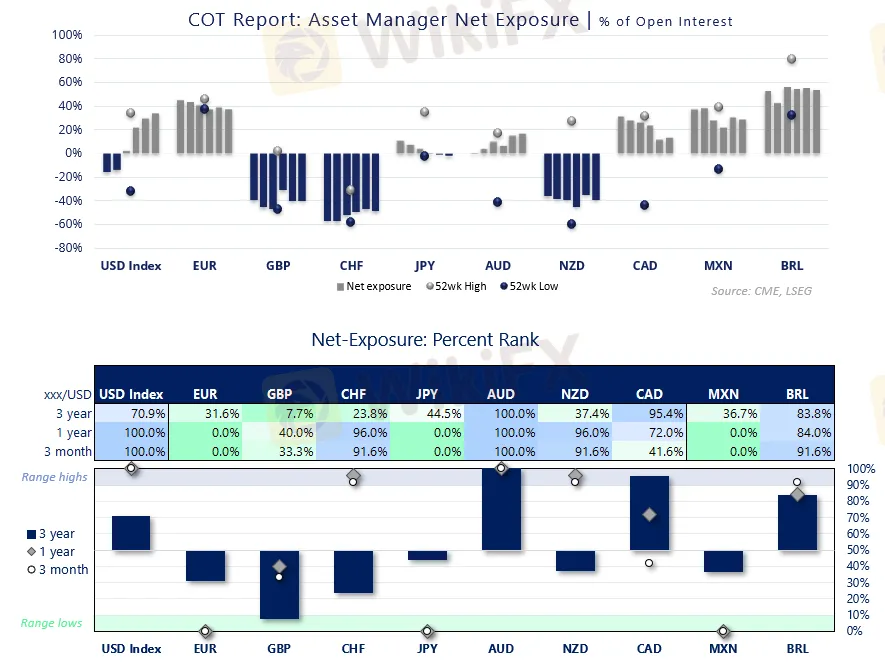
Dollar futures positioning has strengthened, with asset managers building net-long exposure to the highest level in many months. The move is constructive rather than explosive. Long exposure has increased, short exposure has eased, and the overall result is a more supportive backdrop for the dollar than what was seen earlier.
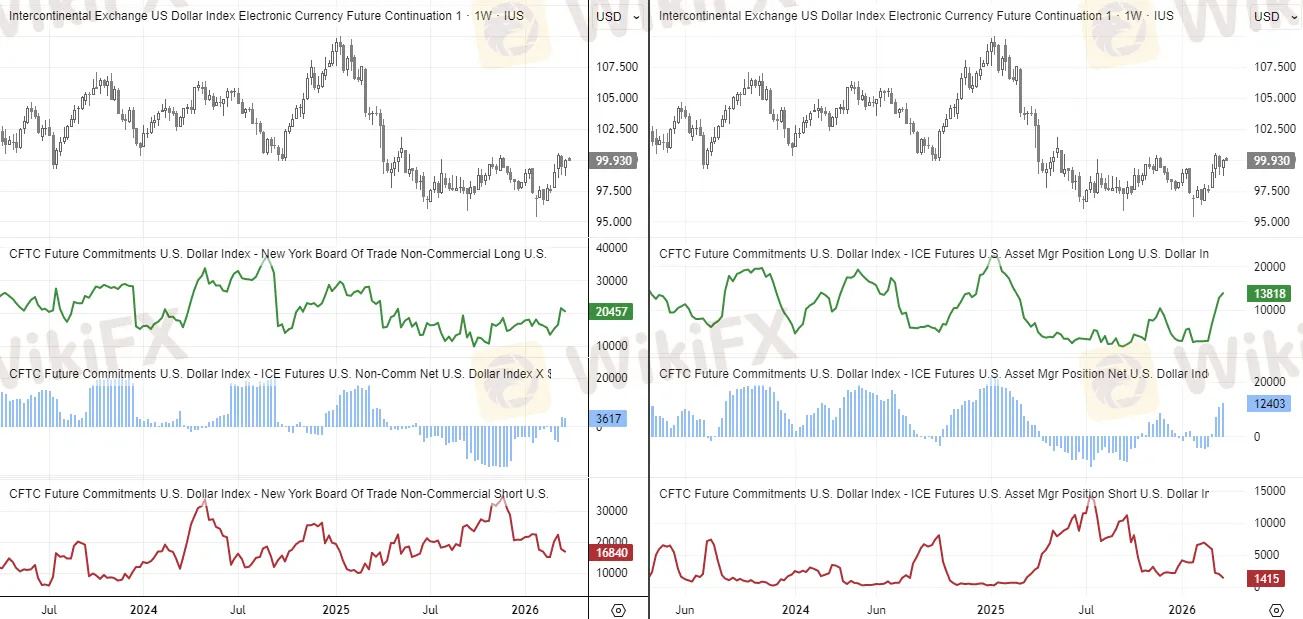
That said, the move still looks measured rather than one-sided. Positioning is stronger, but not stretched enough to suggest the dollar is already overcrowded. In practical terms, that leaves room for the market to keep leaning in the same direction if incoming price action continues to support it.
The broader takeaway is that the dollar no longer looks as directionless as it did during the earlier consolidation phase. Futures traders appear more willing to hold positive dollar exposure again.
The euro side of the picture is much weaker.
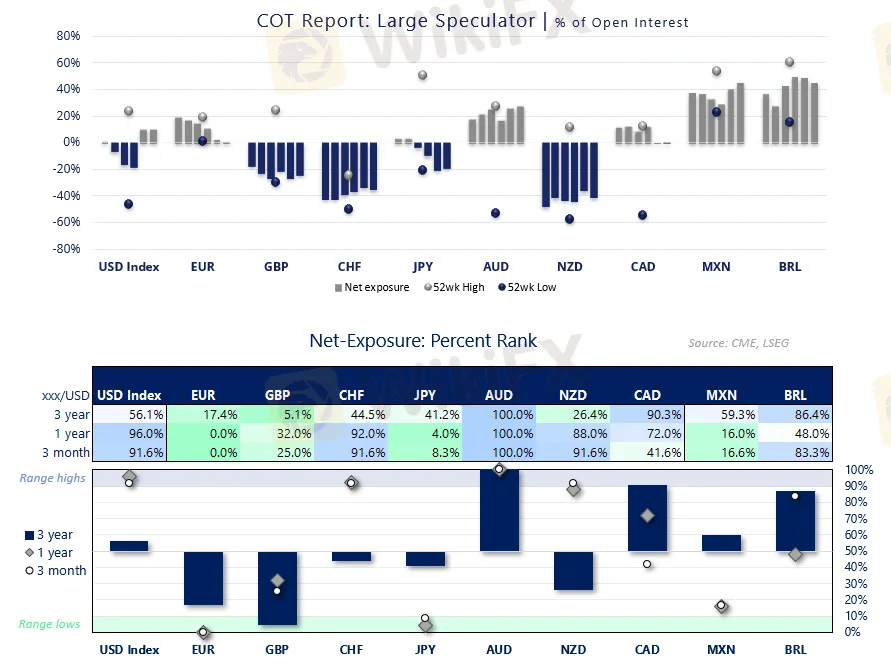
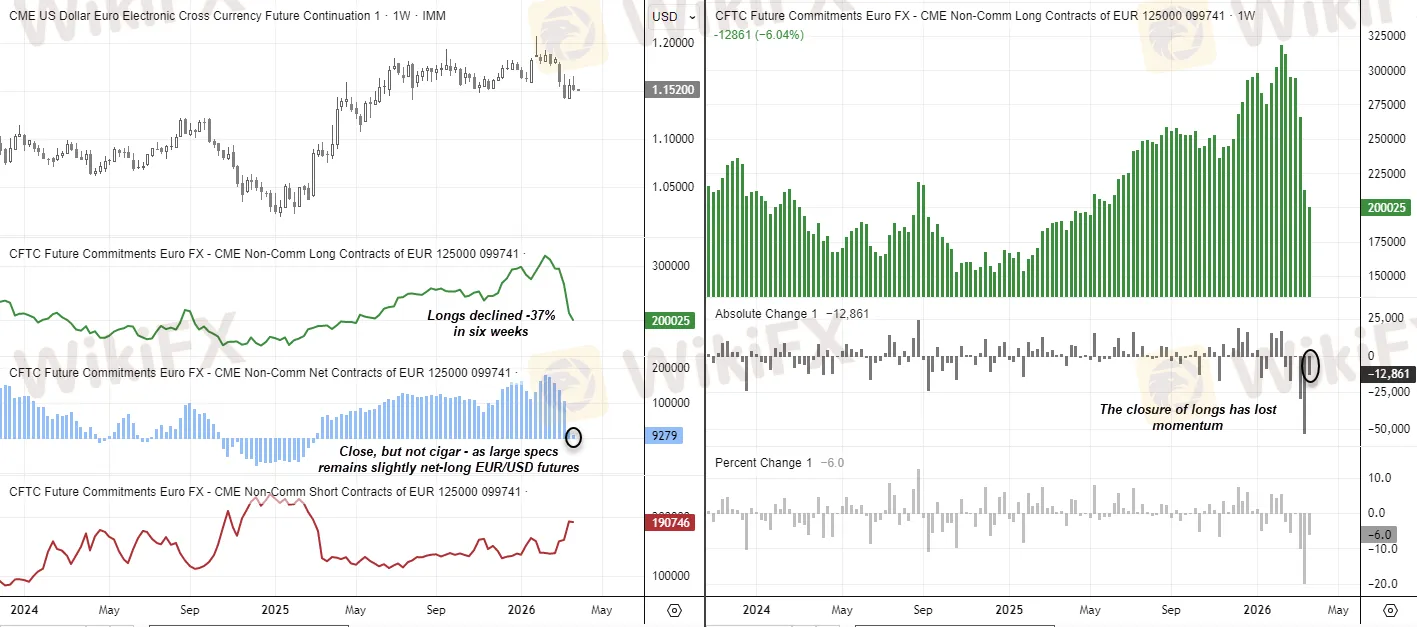
Although large speculators have not fully flipped to a net-short position, bullish exposure has been reduced significantly. Long contracts have been liquidated for several consecutive weeks, and the cumulative drop has been large enough to leave euro sentiment at one of its weakest levels in a long time.
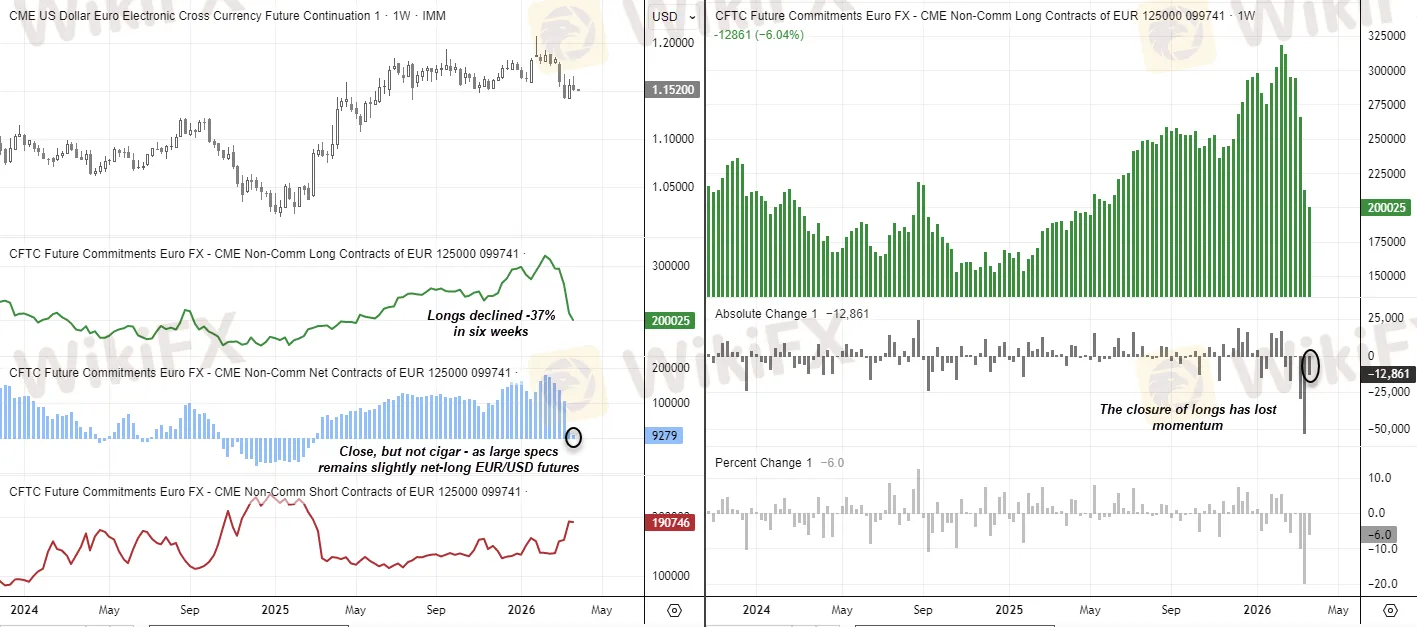
What stands out is not just the decline itself, but the speed of the adjustment. The market has spent several weeks trimming euro longs, which suggests a meaningful shift in conviction rather than a one-week repositioning event.
At the same time, the pace of liquidation may be slowing. That could mean the heaviest part of the euro unwind has already taken place, at least for now. Even so, the current structure still looks far less supportive than it did only a few weeks ago.
For EUR/USD, that leaves the pair in a more fragile position. Without a clear rebuild in long exposure, upside follow-through may become harder to sustain.
The yen is showing one of the more striking changes in the latest report.
Asset managers have flipped to a net-short stance in yen futures, which marks a meaningful change in the way this market is being held. At the same time, net-long exposure has continued to fall for several weeks in a row.
This is important because the yen had previously benefited from a more supportive futures structure. That support now appears weaker. Instead of traders adding to bullish yen exposure, the market has been reducing it, and in some cases turning outright negative.
For USD/JPY, that creates a more constructive backdrop on the upside, even if short-term moves remain uneven. A weaker futures profile for the yen does not guarantee a straight-line move higher in the pair, but it does remove an important source of prior support.
Taken together, the latest COT data points to a market that is leaning more positively toward the dollar than it was a few weeks ago.
The dollar has strengthened without becoming excessively crowded. Euro longs have been reduced sharply. Yen positioning has weakened enough to alter the tone of that market in a meaningful way. Those three developments do not all carry the same weight, but together they create a clearer directional bias across major USD pairs.
For traders, the main message is not that every dollar pair must now trend the same way. It is that the internal structure of futures positioning is becoming more favorable to the dollar overall, while some of its key counterparts are losing support.
The newest FX futures data shows a market in transition. The dollar is attracting steadier support, the euro is no longer enjoying the same bullish conviction, and the yen has lost part of the positioning strength that previously helped underpin it.
That combination does not remove the possibility of short-term reversals, but it does suggest that the broader positioning backdrop has shifted. As long as that remains the case, USD Index, EUR/USD, and USD/JPY are likely to stay in focus.

Disclaimer:
The views in this article only represent the author's personal views, and do not constitute investment advice on this platform. This platform does not guarantee the accuracy, completeness and timeliness of the information in the article, and will not be liable for any loss caused by the use of or reliance on the information in the article.
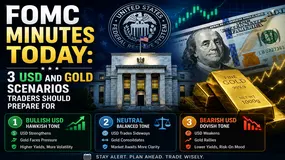
The Fed releases the July FOMC minutes on 19 August 2026. Here are three USD and gold scenarios, confirmation signals, and a practical risk checklist for traders.

A Prime of Prime forex arrangement can help a broker access trading relationships, credit intermediation, technology connectivity, and liquidity aggregation that may otherwise be difficult to obtain directly. But the label does not prove direct bank access, executable depth, or a particular execution outcome. This 2026 guide explains what a forex Prime of Prime, PoP liquidity provider, prime brokerage forex service, and forex prime broker proposal can mean in practice; where the credit and order-routing chain must be documented; how to test pricing, limits, rejects, records, and resilience; and which commercial terms create hidden operating cost. Use the comparison framework, red-flag list, and 90-day launch plan to assess fit for your client mix and risk model. The objective is a controllable execution dependency with traceable evidence, not a marketing claim about institutional access.

FINEX review 2026 for readers comparing an Indonesia forex broker: understand what Bappebti's A+++ rating does and does not show, then check floating spreads, withdrawals, segregated accounts and the complaint route for PT Finex Bisnis Solusi Futures.

Choosing a forex liquidity provider is not a search for the lowest displayed spread or the longest provider list. It is a broker decision about pricing integrity, depth, routing, credit, reporting, incident response, and client communication. This 2026 guide explains how a forex LP, FX liquidity provider, or liquidity provider forex arrangement fits into a broker’s execution chain; what to test before onboarding; why a “best forex liquidity provider” claim cannot replace due diligence; and how to compare cost beyond commission. Use the execution-quality scorecard, provider questions, routing scenarios, and 90-day onboarding plan to assess whether a liquidity relationship can support your actual client mix, instruments, risk model, and jurisdiction. The goal is not to make a universal ranking. It is to build evidence that your broker can explain, supervise, reconcile, and recover its execution service when market conditions are difficult.
WikiFXWikiFXWikiFXWikiFXWikiFXWikiFXWikiFXWikiFXWikiFXWikiFX