


FOMC Minutes Today: 3 USD and Gold Scenarios Traders Should Prepare For
The Fed releases the July FOMC minutes on 19 August 2026. Here are three USD and gold scenarios, confirmation signals, and a practical risk checklist for traders.
Original

简体中文
繁體中文
English
Pусский
日本語
ภาษาไทย
Tiếng Việt
Bahasa Indonesia
Español
हिन्दी
Filippiiniläinen
Français
Deutsch
Português
Türkçe
한국어
العربية
اردو




Abstract:Global markets remain on edge as US–Iran negotiations approach amid a fragile ceasefire and ongoing geopolitical tensions. Despite volatility in energy prices and external uncertainties, Malaysia’s economy is expected to remain resilient, supported by strong exports and stable domestic demand, while inflation stays contained.
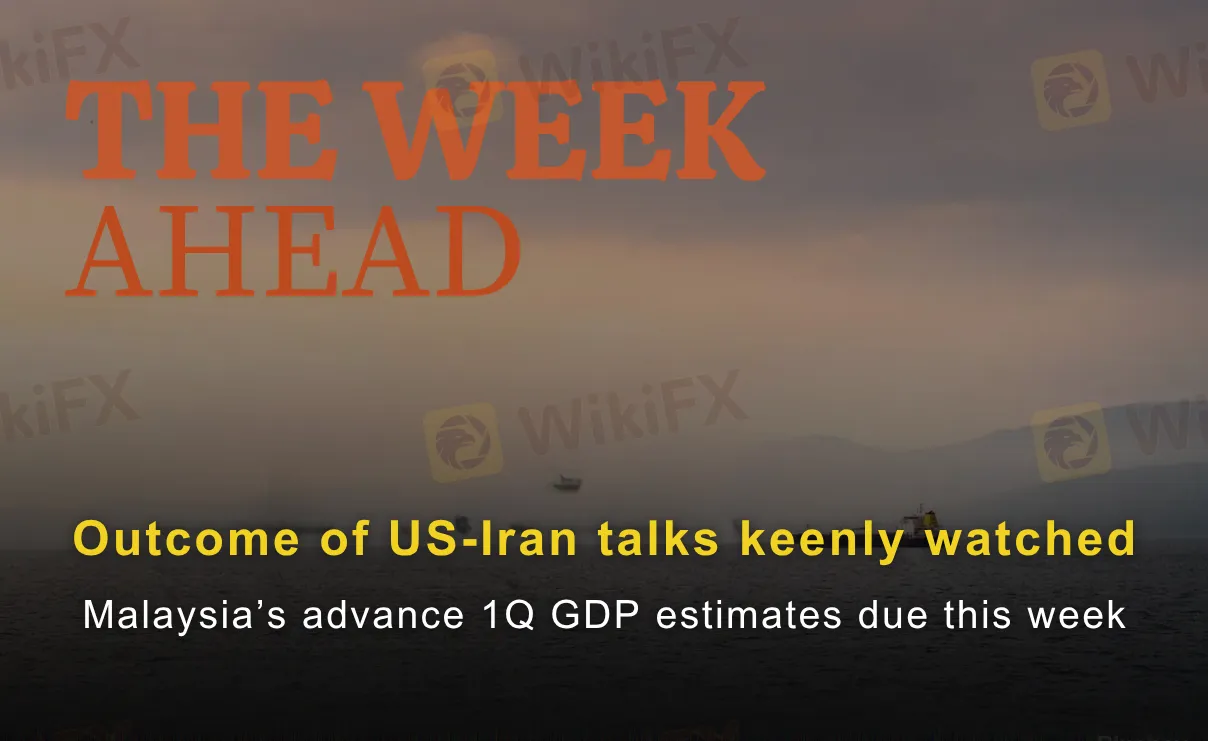
Global attention is now focused on the upcoming negotiations between the United States and Iran, scheduled to take place in Islamabad, Pakistan on April 10 and 11. With tensions still elevated and the recently announced two-week ceasefire appearing fragile, the outcome of these talks will be closely monitored by governments, investors, and markets worldwide.
Although the ceasefire came into effect on April 7, differing interpretations of its scope have already created uncertainty. Iran maintains that the ceasefire includes attacks related to Lebanon, while both the United States and Israel dispute this position. Within hours of the ceasefire taking effect, Israel reportedly carried out airstrikes in Lebanon, resulting in significant casualties. This development has raised concerns about whether the ceasefire can hold, let alone lead to a more sustainable long-term agreement.
At the same time, disruptions in the Strait of Hormuz continue to add pressure to global markets. As one of the worlds most critical oil transit routes, limited passage through the strait has led to ongoing volatility in energy prices. This has broader implications for inflation and economic stability, particularly for countries that rely heavily on imported energy.
Against this uncertain global backdrop, Malaysias economic outlook remains relatively stable. The Department of Statistics Malaysia is set to release its advance estimate for first-quarter GDP on April 17. According to DBS Economics & Strategy Research, the Malaysian economy is expected to record a solid year-on-year growth of around 5.5% for 1Q2026, slightly moderating from 6.3% in the previous quarter. Growth is likely to be supported by continued strength in export-oriented sectors, particularly electrical and electronics manufacturing, which has benefited from rising global demand linked to artificial intelligence technologies. Domestic demand, driven by ongoing construction activities and investment momentum, as well as resilient household spending, is also expected to contribute positively.
Inflation is projected to edge higher but remain manageable. DBS estimates that headline inflation will rise to approximately 1.7% year-on-year in March, compared to 1.4% in February. The increase is attributed to higher food prices during the festive period and rising global energy costs linked to geopolitical developments. However, government subsidies are expected to help cushion the overall impact on consumers.
In the region, monetary policy developments in Singapore will also be in focus. The Monetary Authority of Singapore is scheduled to release its April Monetary Policy Statement on April 14, alongside advance GDP data. Analysts expect a tightening of monetary policy, with a gradual appreciation of the Singapore dollar to manage imported inflation risks, particularly in light of ongoing geopolitical uncertainties.
Meanwhile, China will release its first-quarter GDP figures on April 16. Growth is expected to remain moderate, supported by strong external demand and resilient industrial activity. Manufacturing indicators have shown signs of expansion, although domestic consumption remains subdued due to cautious household sentiment, slower income growth, and ongoing weakness in the property sector.
Beyond macroeconomic data, market participants will also be closely watching the upcoming US corporate earnings season. Major financial institutions, including Goldman Sachs, JPMorgan Chase, Citigroup, and Wells Fargo, are set to announce their results, providing further insights into the health of the global economy.
Overall, while geopolitical risks continue to cast a shadow over global markets, Malaysias economic fundamentals appear relatively resilient. Nevertheless, the coming weeks will be critical, as developments in the Middle East, regional policy decisions, and global economic data collectively shape market direction and investor sentiment.


Disclaimer:
The views in this article only represent the author's personal views, and do not constitute investment advice on this platform. This platform does not guarantee the accuracy, completeness and timeliness of the information in the article, and will not be liable for any loss caused by the use of or reliance on the information in the article.
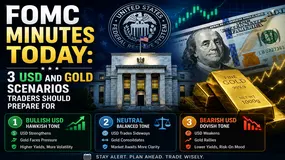
The Fed releases the July FOMC minutes on 19 August 2026. Here are three USD and gold scenarios, confirmation signals, and a practical risk checklist for traders.

India's rupee is expected to open near 95.14-95.16 per US dollar after closing at 95.2075 on Friday, while Brent crude was quoted at $84.50 and RBI market presence supported the currency. This report separates a reported market intervention from a fixed exchange-rate target, explains why oil, US employment data and Federal Reserve expectations matter, and gives a practical risk checklist for forex trading India. It also explains why volatility is not a reason to trust unverified online forex trading platforms.

The Reserve Bank of India has appointed Monisha Chakraborty as Executive Director with effect from 3 August 2026; she will oversee the Foreign Exchange Department and the Financial Markets Regulation Department. Chakraborty is a career central banker with over three decades of experience in Supervision, Foreign Exchange, and Government and Bank Accounts, and previously served as Banking Ombudsman. This report explains the significance of the new RBI Executive Director appointment for forex regulation India, the scope of the Foreign Exchange Department and the Financial Markets Regulation Department, and what authorised persons, banks, and forex market participants should monitor as the new ED takes charge.
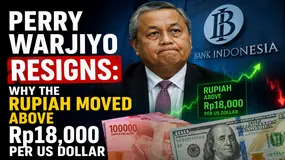
Perry Warjiyo resigned as Bank Indonesia governor, Destry Damayanti became acting governor, and the rupiah traded above Rp18,000. Here is what forex traders should monitor next.
WikiFXWikiFXWikiFXWikiFXWikiFXWikiFXWikiFXWikiFXWikiFXWikiFX